


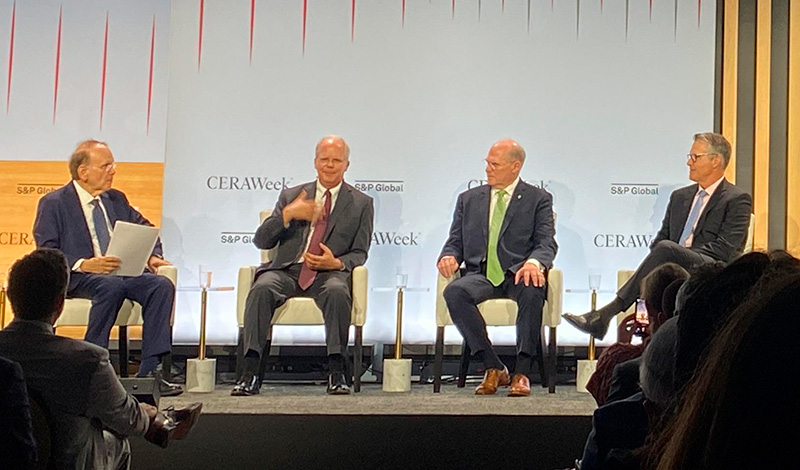
The discussion focused on energizing North American growth. Experts analyzed the rapidly changing global market. Industry leaders highlighted the urgent need for infrastructure development. Government officials debated crucial legislative reforms.
A strategic pivot toward energy dominance currently drives the resurgence of North American production. This strategy prioritizes the rapid expansion of supply. It also emphasizes the creation of robust baseload power. Streamlining permitting processes represents a critical priority today. Companies view building infrastructure as essential to lowering domestic costs. These physical expansions fuel the massive energy demands of modern economies. Artificial intelligence and digital manufacturing require staggering amounts of electricity.
Acceleration of infrastructure projects ensures long-term price stability. It also guarantees the United States’ global export leadership. Private sector companies require specific regulatory reforms. They need fiscal predictability to build large-scale energy projects. Global competitiveness depends entirely on these modernization efforts. Several prominent figures addressed these exact challenges during a dedicated panel. Daniel Yergin chaired the vital discussion. He serves as Chairman of CERAWeek and Vice Chairman of S&P Global.
The Surge of Digital Demand
The XXI century economy demands massive electrical power. Artificial intelligence drives this unprecedented surge. Digital manufacturing also rapidly accelerates energy consumption. Data centers require reliable, continuous baseload generation. Energy executives recognize this critical urgency. Policymakers also understand the growing threat. They gathered at CERAWeek 2026. The leaders discussed North American competitiveness.
François Poirier serves as President and Chief Executive Officer of TC Energy. He emphasized the sheer scale of upcoming needs. Industry experts project massive demand growth. They expect 45 billion cubic feet per day of growth. This expansion will hit North America over the next decade. Poirier noted the staggering magnitude of this figure. “That’s the entirety of the European natural gas system we’re going to add over the next decade,” Poirier stated. This rapid expansion severely strains existing infrastructure. Facilities face huge challenges in acquiring sufficient power. Technology firms build new data centers constantly.
These companies actively seek locations with established energy access. Poirier highlighted this strategic relocation trend. “The demand has moved to where there’s pipeline capacity,” Poirier explained. This shift buys valuable time for energy providers. However, temporary solutions cannot sustain long-term global leadership. The United States must rapidly expand physical networks. Failure threatens economic stability. Foreign competitors eagerly await any domestic missteps.
The Bureaucratic Barrier
Building large-scale projects remains incredibly difficult today. Complex regulations hinder physical progress significantly. Pierce H. Norton II leads ONEOK. He serves as President and Chief Executive Officer. Norton traced these regulatory hurdles through history. Some rules originated in the 19th century. Lawmakers designed them to control regional monopolies. Other frameworks emerged in the 20th century.
Politicians created those for strict environmental protection. Norton accurately described this historical accumulation of rules. “It just kind of was regulation on regulation on regulation,” Norton said. Today, developers face up to seven different agencies. These agencies operate at the local, state, and federal levels. This multilayered system creates severe operational bottlenecks. Project timelines stretched drastically over the years. In 2005, developers routinely finished projects quickly. They completed permit phases within 18 months.
Currently, approval processes drag on for several years. Litigation poses the most significant threat today. Opponents use lawsuits to stall construction indefinitely. Environmental groups frequently target pipeline development. They block transportation to restrict upstream extraction activities. This strategy effectively halts natural gas production. Government agencies fear these constant lawsuits deeply. Bureaucrats over-analyze every permit application. They try to avoid destructive legal challenges. This defensive approach paralyzes the entire system completely.
Crafting Legislative Solutions
Congress actively pursues regulatory reform today. Honorable Brett Guthrie chairs a crucial congressional committee. He leads the House Committee on Energy and Commerce. Guthrie champions bipartisan legislation aggressively. He wants to accelerate infrastructure approvals nationwide. Guthrie stressed the necessity of a unified political approach. “They have to be bipartisan if they’re going to go into law,” Guthrie confirmed.
The Senate requires 60 votes to pass these measures. Lawmakers race against the upcoming election cycle. They aim to finalize a legislative package by this spring. The proposed reforms do not eliminate environmental protections. They strictly optimize the administrative decision-making process. “We’re not changing any standards. Just getting the decision… just make the decisions important,” Guthrie explained. Industry leaders support several critical framework adjustments. Poirier outlined three primary areas requiring immediate attention.
First, authorities must limit the scope of environmental reviews. Agencies should only evaluate direct project impacts. Second, the government must establish fixed timelines. Applicants need reliable schedules for project planning. Third, approved permits must withstand arbitrary legal challenges. Project developers possess extensive field experience. They know how to protect local ecosystems during construction. Lawmakers want to utilize this industry expertise effectively. Meaningful reform requires rapid implementation immediately.
The Invisible Highway Network
Natural gas drives the current energy expansion. However, the public rarely understands the supply chain. Norton illuminated the physical reality of American infrastructure. He referenced the vast network hidden underground. “There’s 3.3 million miles of invisible highway in the United States,” Norton revealed. This massive pipeline system keeps the economy functioning daily. People often ignore the complexity of extraction.
Producers do not pull pure methane from the ground. Norton provided crucial statistics regarding this process. He noted that 65% of the United States natural gas contains associated liquids. Processors must separate these liquids carefully. They complete this before transporting the dry gas. This separation requires extensive additional infrastructure. Facilities handle massive volumes of raw materials constantly. A daily feed of 7.5 million barrels of oil yields significant byproducts.
This process generates roughly 800,000 barrels of associated natural gas liquids. Operators must construct specific pipelines. They need separate lines for oil, gas, and liquids. The industry urgently needs more fractionation facilities. Companies also require advanced processing plants quickly. Capital markets stand ready to fund these expansions. Financial institutions eagerly back viable infrastructure proposals. Regulatory speed simply must match investor enthusiasm.
North American Alignment
Geopolitical pressures force North American countries to cooperate. The United States, Canada, and Mexico share energy goals. Leaders across the continent want faster development. Poirier observed this unique trilateral alignment. “We’re fortunate in that for the first time in at least a decade… energy policy in Canada, the United States, and Mexico… are all extremely well aligned,” Poirier stated. Each nation features different governmental structures.
They manage political realities uniquely. Nevertheless, developers seek the same regulatory certainties everywhere. Companies desire single-agency oversight continuously. They also demand fixed approval timelines firmly. Currently, the United States attracts the majority of investment capital. Poirier explained his company’s aggressive strategy. TC Energy directs most of its discretionary capital southward.
The velocity of growth drives this financial decision. Favorable policy environments encourage domestic infrastructure spending. Poirier compared capital investment to fluid dynamics. “Capital is like a bucket of water. You pour it on the ground, and it’s going to flow at the points of least resistance,” Poirier remarked. The United States currently offers that exact path. Foreign investors recognize this domestic advantage quickly. North America can achieve global energy dominance.
Fueling the Artificial Intelligence Race
Technology creates unprecedented electrical demands nationwide. Artificial intelligence systems consume staggering amounts of power. Politicians recognize the geopolitical implications of this technology. Guthrie shared a sobering perspective from a colleague. He highlighted the stakes of global dominance. “Whoever controls AI… they will be a superpower,” Guthrie noted.
He framed this technological competition accurately. He called it a colossal global battle. Energy abundance directly determines the supremacy of artificial intelligence. Data centers require continuous, reliable, low-cost electricity. Wind and solar power provide only intermittent generation. Natural gas reliably delivers consistent baseload power. Opponents of fossil fuels ignore this fundamental engineering reality. Guthrie warned against blocking energy projects for ideological reasons. “If they think climate change doesn’t produce energy for AI, you want to look at it,” Guthrie cautioned.
The United States cannot afford energy shortages. Constrained supply leads directly to high consumer prices. Expensive electricity cripples domestic manufacturing capabilities. American citizens remember previous severe fuel shortages clearly. These crises occurred frequently during the 1970s. Drivers waited in long lines to purchase gasoline. Robust infrastructure prevents those historical crises from repeating. A strong grid effectively ensures national security.
Global Exports and Geopolitics
Domestic energy production secures international alliances firmly. The United States exports significant volumes of fuel. Facilities ship liquefied natural gas worldwide daily. These exports stabilize global markets efficiently. Some critics want to restrict energy exports entirely. They wrongly believe export bans lower domestic prices. Guthrie strongly rejected this flawed economic theory. He compared energy to common agricultural products.
The country routinely exports massive quantities of crops. Farmers ship 33% of every corn harvest overseas. Banning agricultural exports would immediately devastate American farmers. Similarly, restricting energy exports harms the domestic economy. Foreign nations desperately need reliable American fuel supplies. Japan and South Korea actively seek natural gas shipments. Guthrie emphasized the strategic importance of these relationships.
“Do you want them to be dependent on China?” Guthrie asked. American energy independence shields allies from hostile nations. Buyers refuse to wait years for American approvals. They will simply purchase fuel from rival countries instead. Rapid project completion ensures global market dominance. The United States must process export facility permits swiftly. Delaying permits adversaries to surrender geopolitical leverage directly. Speed ensures market stability and diplomatic strength.
Industry Resilience and Human Capital
Energy companies constantly adapt to challenging regulatory environments. Pipeline operators maximize their existing physical assets. Poirier praised the industry for its recent innovation. Companies utilize brownfield expansions to increase capacity economically. Developers upgrade current facilities efficiently. They avoid building completely new ones when possible.
This strategy bypasses many complex environmental review processes. However, these efficiency measures cannot replace necessary new construction. The industry relies heavily on its dedicated workforce. Norton took time to honor these essential field workers. He described the employees who maintain the infrastructure network. Norton designated these workers as the true heroes. “Superheroes make that super power. And those are our people in the field,” Norton declared.
These professionals ensure constant energy delivery regardless of politics. Millions of barrels move through the system every single day. The future of American competitiveness depends on these precise operations. Bureaucrats must streamline approvals to support this vital sector. The nation possesses the required natural resources. Corporations hold the necessary financial capital. The workforce maintains the needed technical expertise. Only outdated regulatory frameworks stand in the way of progress. Swift legislative action remains the only viable solution.
More news: Company Strategies for a World in Transition
More: CERAWeek
