


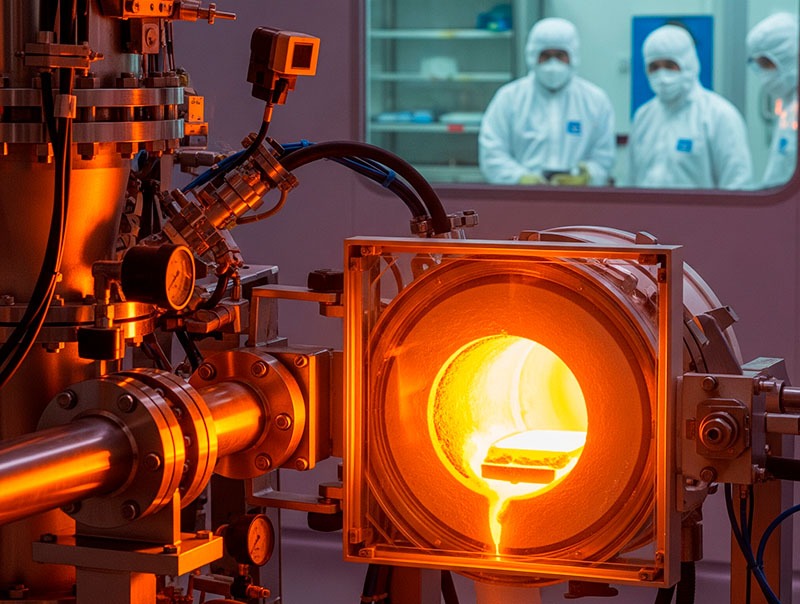
The Department of Energy announced a $69,000,000 investment opportunity to secure vital industrial resources. The Critical Minerals and Materials Accelerator aims to transform domestic supply chains through technological innovation. The initiative targets the rising demand for foundational materials that power XXI century technologies. The Office of Critical Minerals and Energy Innovation drives this effort alongside the Advanced Materials and Manufacturing Technologies Office.
This specific accelerator represents roughly 7% of a much broader federal funding strategy. The federal government recently dedicated nearly $1,000,000,000 to advance mining, processing, and manufacturing capabilities across the United States. Officials designed the new program to establish a secure, predictable, and affordable supply of critical minerals. These elements directly anchor American energy dominance, national security, and long-term industrial competitiveness.
The accelerator program targets industry-led partnerships to pilot new processing technologies. Currently, many innovative material extraction methods only exist at the bench scale. The government wants to mature these technologies to ultimately attract private capital investments. The initiative also leverages existing federal research hubs, such as the Critical Materials Innovation Hub and the Minerals to Materials Supply Chain Research Facility.
Expanding Rare Earth Element Production
The first major focus area targets material efficiency. Companies will develop new ways to produce rare earth elements. The program strongly encourages the recovery of materials from postindustrial scrap. Innovators will also mine postconsumer scrap to find valuable components. For example, electronic waste and discarded drivetrains hold massive potential. Facilities will process blended feedstocks, including traditional mine tailings. This approach recycles existing waste into high-value technological assets.
Refining Essential Semiconductors
The second topic area focuses on specialized refining processes. Manufacturers need better ways to alloy vital semiconductor materials. The funding supports ambitious projects involving gallium and gallium nitride. Companies will also refine germanium and silicon carbide. These specific materials power modern electronics and advanced renewable energy systems. The accelerator helps American companies build independent processing facilities. This limits reliance on foreign semiconductor supply chains.
Innovations in Lithium Extraction
The third topic area addresses the booming industrial demand for lithium. The government seeks cost-competitive direct lithium extraction methods. Researchers must advance both pre-treatment and disposal technologies. Geothermal systems offer a unique opportunity here. Teams will explore volcanic-hosted geothermal environments to find critical materials. These innovations make lithium separation significantly cleaner and faster. Direct extraction eliminates the need for massive traditional evaporation ponds.
Application Timelines and Project Goals
The Department of Energy sets strict deadlines for the 2026 funding cycle. Interested organizations must submit mandatory letters of intent by April 21, 2026. The agency will review full applications throughout the summer of 2026. Officials expect to notify selected projects between July and August 2026. The agency will distribute final awards before the end of 2026. The estimated period of performance runs through December 2029. This precise timeline guarantees the rapid deployment of commercial-scale processing plants.
More news: Decoding the Blue Glow: The Physics and Function of Cherenkov Radiation
More: DOE
