


The utopian vision of a rapid green transition has collided with the harsh realities of a transactional global economy. Industry leaders and policymakers at CERAWeek 2026 outlined a landscape. If was defined by critical mineral monopolies, the explosive power demands of artificial intelligence, and the enduring resilience of hydrocarbons.
The global economy is undergoing a structural transformation, shifting decisively away from a multilateral consensus into a zero-sum, transactional system. This new geopolitical reality has forced the energy sector to abandon idealistic decarbonization timelines in favor of pragmatic execution. Energy giants are dialing back aggressive climate commitments amid inflation, persistent supply chain bottlenecks, and severe bureaucratic delays.
Instead of an immediate phase-out, traditional oil and gas are now recognized as the indispensable bridge. It is required to stabilize global power grids and fund future innovations. Consequently, major corporations are reallocating capital toward long-cycle hydrocarbon assets. This is effectively cementing the role of fossil fuels for decades to come.
The Artificial Intelligence Power Drain
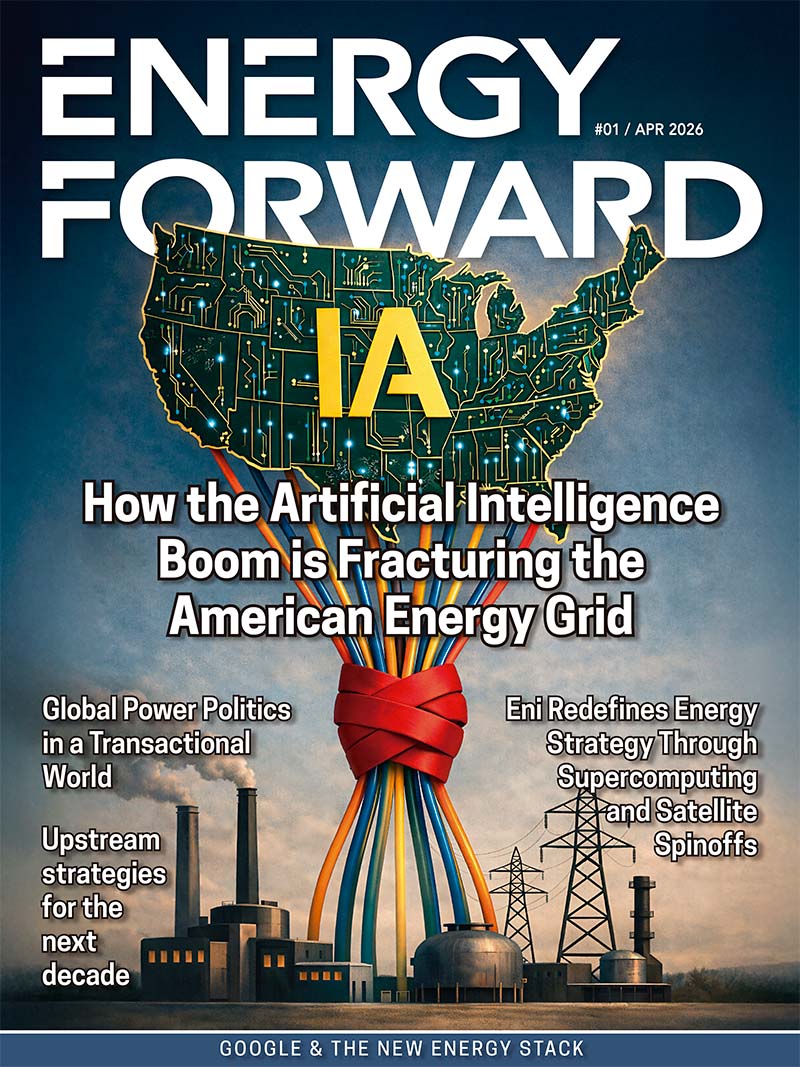
The exponential growth of artificial intelligence is fundamentally altering national electricity demand, creating a massive new strain on existing infrastructure. Hyperscale data centers require immense, uninterrupted baseload power—often between 10 and 11 gigawatts. Major technology giants like Meta and Google have promised over $30 billion in spending for these facilities.
Because intermittent renewable energy sources cannot currently meet these strict continuous reliability requirements, the tech industry is increasingly relying on natural gas. To meet this staggering demand, the North American industry anticipates a natural gas expansion of 45 billion cubic feet per day over the next 10 years—an addition equivalent to the entirety of the European natural gas system.
Federal Intervention and the Defense Production Act
Recognizing infrastructure limitations and global supply chain vulnerabilities as a direct threat to national security, the United States Executive Branch took drastic action. In April 2026, the administration invoked Section 303 of the Defense Production Act of 1950 to mandate federal intervention in the energy sector.
The directive fast-tracks financial support and bypasses standard environmental reviews on federal and tribal lands to accelerate large-scale energy systems. The government aims to increase domestic crude production by 15% by late 2026, push domestic refinery capacity above 20 million barrels daily, and increase coal stockpiles by 30%. While energy executives and markets praised the removal of regulatory red tape, the move has sparked intense protests from environmental advocates and indigenous communities concerned about long-term ecological degradation.
Critical Minerals and the Refining Chokehold
The transition to low-carbon infrastructure relies entirely on the extraction and processing of critical minerals. However, the global supply chain operates through a massive geographical chokehold, with the refining sector overwhelmingly dominated by China. Currently, China refines 45% of the global copper, 76% of the lithium, and a staggering 98% of the graphite.
This centralization is compounded by “involution”—a severe domestic competition within China that has driven green technology prices to unsustainable lows. For instance, the average price of solar module production has plummeted to $0.07 per watt, operating at a 12.5% loss compared to the $0.08 break-even point. These artificially suppressed prices make it mathematically impossible for Western startups to build competitive manufacturing facilities. In response to rising Western tariffs, dominant foreign manufacturers like LONGi are shifting strategies, exporting their manufacturing capacity directly to the United States to bypass trade barriers.
Technological Renaissance in Traditional Energy
While the green transition recalibrates, the traditional oil and gas sector is undergoing a massive technological renaissance. Corporations are leveraging advanced supercomputing to drastically reduce exploration risks and compress project timelines. Eni’s HPC6 supercomputer, boasting 600 petaflops of processing power, allows the company to reduce its time-to-market for large-scale offshore projects to just 3.5 to 4 years.
To navigate the financial friction of the transition, companies are also deploying innovative “satellite” financial models. By spinning off retail gas, power generation, and advanced biorefineries into independent corporate entities, parent companies can attract private equity for green-aligned returns without draining their primary balance sheets. Over a two-year period, these transitional satellite companies successfully raised over $6 billion in external capital.
The Blue-Collar Deficit
Despite massive capital investments and technological breakthroughs, the entire energy supply chain faces a severe physical limitation. This means a chronic lack of skilled human labor. Western nations are facing a critical deficit of technical workers, including specialized welders, electricians, and heavy machinery operators.
Data indicate that nearly 70% of the new job opportunities in expanding industrial sectors do not require a traditional four-year college degree. Industry leaders are sending a warning. Without a massive societal reinvestment in vocational training and trade schools, the ambitious infrastructure and extraction projects required for energy dominance will remain permanently stalled.
More News: Geopolitical Tensions Keep Oil Prices High Amid Stalled Iran Diplomacy
More: CERAWeek
