


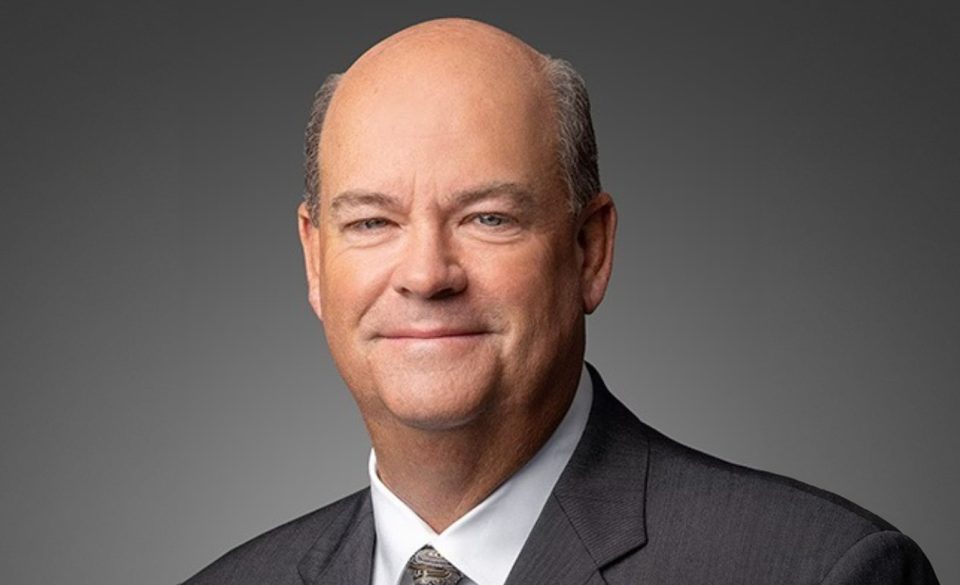
iCERAWeek 2026 dictates global resource strategies. Resource extraction directly shapes the economic futures of local communities. ConocoPhillips CEO Ryan Lance delivered a critical keynote address on Supply Security and Infrastructure. He outlined severe vulnerabilities across the global supply chain. The industry faces unprecedented geopolitical tension. Corporations navigate rapidly shifting regulatory frameworks.
Global power demand continues to rise steeply. Lance offered a stark assessment of the international market. The 21st century requires robust energy security measures. Decision-makers balance long-term capital deployments with sudden supply shocks. The conference highlighted a deep divide between federal policy and actual production. Infrastructure limitations severely threaten domestic energy reliability.
Companies struggle constantly to secure timely permits for new facilities. The modern energy landscape demands swift adaptation from corporate operators. Leaders must protect the land while powering the nation. The earth provides immense wealth. Humanity must extract it responsibly.
Assessing Global Supply Risks
Geopolitical instability threatens a large share of global energy output. Lance warned the audience about sudden market disruptions. He noted the sheer danger of removing massive production volumes. “You can’t take 8 to 10 million barrels a day of oil and 20 or so percent of the LNG market off the world stage without having some significant repercussions,” Lance stated.
ConocoPhillips controls major financial investments in Qatar. These assets face elevated risks amid ongoing regional conflicts. Lance urged federal authorities to protect these critical facilities. “We’re obviously the big investor in Qatar,” he explained. He asked the administration for extra protection around United States assets. The company recently evacuated non-essential staff due to immediate safety concerns.
Global petroleum inventories face rapid depletion. The market curve must change shape to refill these vital reserves. Energy companies struggle to assess the ultimate market implications. The world watches these developments closely. Security remains the top priority.
A Contrarian Investment Strategy
ConocoPhillips recently adopted a contrarian growth strategy. Competitors slashed capital expenditures during soft commodity cycles. ConocoPhillips leaned heavily into long-cycle investments instead. Lance defended this aggressive capital allocation program. The corporation significantly expanded its liquefied natural gas operations.
Executives directed funds toward Alaska, Norway, the Middle East, and Asia. “We’re going to reinvest back into the growth and development companies for the next couple of decades and beyond,” Lance noted. Energy leaders foresee a growing market demand for a long period. Global market models indicate a sharp increase in consumption. Global demand grows by roughly 1 million barrels a day per year. Mid-cycle prices must rise to incentivize future extraction.
The company currently builds new export projects along the Gulf Coast. Shareholders initially questioned this bold long-term corporate vision. The aggressive strategy now yields substantial strategic advantages. The firm operates from a position of immense strength. Resource depth provides a competitive edge.
The Willow Project Advances in Alaska
The Willow Project represents a massive triumph for ConocoPhillips. The Alaska development survived intense political and legal battles. Bureaucratic delays severely frustrated corporate leaders. The massive project required 5 years to secure the necessary permits. Construction operations will conclude in roughly 4 years. “It will take 5 years to permit this project, and we’ll have it fully executed in just under 4 years,” Lance stated.
Laborers recently completed about 50% of the project. Crews build massive ice roads during freezing winter months. Workers deploy heavy equipment across the frozen tundra. Contractors will finish laying gravel for the main facilities soon. Snow melts in late April, halting immediate ground operations. The site will ultimately produce massive oil volumes. Operations will yield 160,000 to 180,000 barrels a day. The corporation operates two active rigs for exploration drilling. Permitting timelines underscore deep systemic inefficiencies. Companies demand regulatory reform.
Domestic Production and Efficiency Gains
The United States maintains strict dominance in shale extraction. Permian Basin operations drive significant growth in liquid volumes. Current national production sits near 13.5 to 13.6 million barrels a day. The industry anticipates only modest future growth. Production will likely plateau just above 14 million barrels a day. Current price environments suppress rapid expansion efforts.
Corporations finalized their 2026 operational plans late last year. Any new capital deployment today directly affects 2027 production. Technological advancements drive remarkable operational efficiencies across the sector. ConocoPhillips reports a 10% to 15% year-over-year efficiency improvement. Drilling crews locate oil wells with much greater precision.
Petroleum engineers stimulate subterranean rock lines more effectively. “It’s only getting better each year,” Lance remarked. He strongly believes these efficiency trends will continue indefinitely. These specific innovations successfully reduce total costs per barrel. Smarter drilling protects the environment. Efficiency maximizes the harvest.
Infrastructure Roadblocks and Energy Demand
Resource availability does not limit domestic energy security. Poor infrastructure connectivity creates massive regional supply bottlenecks. “It’s not a resource problem, it’s a connectivity problem,” Lance argued. The Northeastern United States burns fuel oil for winter heating. The prolific Marcellus Shale lies nearby, with abundant natural gas.
A strict lack of pipelines prevents efficient fuel distribution. Bipartisan momentum builds for comprehensive national permitting reform. Lawmakers recognize the urgent necessity for faster agency analysis. The United States faces an exploding regional electricity demand. Flat electricity demand characterized the past 20 years. The current landscape features a dramatic surge in consumption.
Houston residents watch their monthly electricity rates double over 4 years. Expanding energy exports demands massive infrastructure upgrades immediately. Government officials must streamline slow judicial review processes. Energy projects require modernized pipes, roads, and high-voltage transmission lines. The grid needs immediate reinforcement.
Venezuela and Nationalization Fallout
Foreign investments carry severe geopolitical risks for energy corporations. ConocoPhillips understands this brutal reality deeply. The Venezuelan government expropriated valuable company assets in 2007. The firm produced over 450,000 barrels a day before the seizure. International arbitration currently awards ConocoPhillips roughly $12 billion.
The company demands strict adherence to policy before reinvesting capital. Venezuela holds massive untapped heavy oil reserves. A million barrels a day currently flow from the South American nation. Venezuelan leaders aspire to reach 3 million barrels a day. This massive increase in production requires a completely rewired fiscal system. The current hydrocarbon law remains heavily punitive for operators.
Government authorities take 94% to 95% of total revenues. The environment completely stifles outside investment. The country desperately needs serious contract security guarantees. Companies refuse to deploy significant capital under current conditions. Trust requires legal stability. The land waits for responsible partners.
Louisiana Expands Liquefied Natural Gas
Venture Global LNG leads massive expansion efforts across Louisiana. CEO Mike Sabel detailed the firm’s aggressive growth trajectory. The corporation develops the Plaquemines and CP2 export facilities. Operations will soon reach 70 million tons of total production capacity. The CP2 facility will officially activate next year. “We’re already placing massive orders for the brown field expansions of CP2,” Sabel confirmed.
The volatile global market demands flexible export contract structures. International customers want a diverse range of long-term and short-term deals. Venture Global secures heavy commitments for 20-year energy contracts. Facility engineers utilize massive operational data streams. Computer systems collect information from over 1 million data points.
They stream half a million data points every 10 seconds. Artificial intelligence integration maximizes total excess production capacity. Louisiana provides a deeply experienced workforce for these facilities. The state maintains strong ongoing partnerships with energy developers. Progress requires mutual cooperation.
Workforce Dynamics in the Energy Sector
Labor shortages severely threaten large-scale infrastructure projects. Energy executives identify workforce acquisition as a primary challenge. Louisiana Governor Jeff Landry emphasized the need for new educational priorities. Traditional four-year college degrees no longer guarantee economic success.
“70% of the new job opportunities in Louisiana don’t require a four-year college degree,” Landry noted. These vital technical positions often provide superior financial compensation. State leaders actively push young people toward specialized skill sets. Venture Global LNG currently operates internal job training programs. Instructors train new workers in specialized welding and pipe fitting.
Companies recruit heavily from neighboring states like Texas. Louisiana features multiple generations of highly skilled industrial workers. Older experienced laborers train new apprentices directly on site. Severe permitting delays exacerbate complex workforce planning challenges. Landry wants businesses to move forward while the permit application process. The workforce needs consistent employment. Delays harm local families.
Artificial Intelligence Drives Power Needs
The expansion of artificial intelligence is driving a staggering increase in national electricity demand. Hyperscale technology companies build massive data centers globally. Louisiana attracts massive financial investments from major technology giants. Companies like Meta and Google promise over $30 billion in spending.
These massive digital facilities require 10 to 11 gigawatts of power. Data centers rely heavily on natural gas for stable electricity. “It means money, it means opportunity, it means growth,” Landry stated regarding data centers. State officials must protect residential consumers from sudden power costs. Unregulated data center expansion destabilizes local utility grids.
Technology facilities often build independent power generation behind the meter. Natural gas provides the strict reliability needed for continuous operations. Intermittent renewable energy sources constantly fail to meet hyperscale requirements. The energy sector must build excess power capacity immediately. The global technology race fundamentally alters natural gas consumption. Communities must adapt quickly.
The Future of Global Energy Security
The CERAWeek 2026 conference revealed a rapidly changing industry. Global disruptions force sovereign nations to prioritize energy security. The ongoing energy transition requires massive immediate capital investments. Traditional hydrocarbons remain absolutely essential for global economic stability.
Corporations demand strict regulatory certainty before breaking new ground. Political leaders must streamline slow bureaucratic permitting systems. The United States holds immense domestic production potential. High-volume export capacity links domestic resources to international allies. Executives strategically plan for the next 50 years of production. Market forces ultimately dictate all infrastructure development timelines.
More news: Critical Minerals: Stimulating durable development amid pricing volatility
More: CERAWeek
