


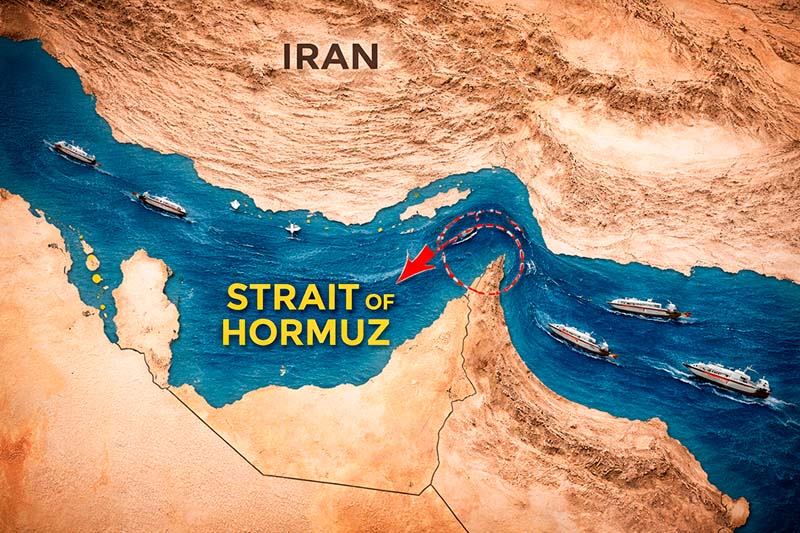
The unprecedented military escalation involved U.S. and Israeli forces in Iran. The actions culminating in Tehran’s aggressive blockade of the Strait of Hormuz have plunged global energy markets into a state of high alert. Roughly 20% of global oil consumption is effectively bottlenecked. The macroeconomic fallout is reverberating across industrial sectors and equity markets alike.
The physical restriction of the Strait of Hormuz immediately jeopardizes approximately 21 million barrels of oil per day (bpd). In response to the geopolitical premium, Brent crude futures have violently breached the $109-per-barrel threshold, while West Texas Intermediate (WTI) is tracking closely behind. This translates to an immediate 15% to 20% spike in spot fuel pricing, threatening to compress operational margins for energy-intensive manufacturing and freight operations through the end of the second quarter.
Wall Street’s Energy Rally
As crude benchmarks spike, U.S. energy equities are experiencing a massive influx of capital. The Energy Select Sector SPDR Fund (XLE) has posted historic single-day gains, helping anchor the Dow Jones Industrial Average amid broader market headwinds. Institutional investors are aggressively rotating into upstream exploration and production (E&P) equities. They are using them as a tactical hedge against the looming threat of conflict-driven inflation.
Capital Discipline Over CAPEX Expansion
Despite the triple-digit oil pricing environment, U.S. supermajors like ExxonMobil and Chevron are deliberately pivoting away from historical “boom-and-bust” playbooks. Instead of greenlighting massive capital expenditure (CAPEX) increases to deploy new rigs in the Permian Basin, executive boards are maintaining strict financial discipline. Companies are redirecting windfall free cash flow (FCF) yields directly toward aggressive share buyback programs and dividend hikes. It is projected to exceed $40 billion combined for the top two majors this fiscal year. Therefore, these signals a continued focus on optimizing existing wellhead efficiencies and leveraging advanced recovery techniques, rather than pursuing pure-volume-driven greenfield expansion.
More News: How Tungsten is Redefining Defense and Global Markets
More News: International Energy Agency
