


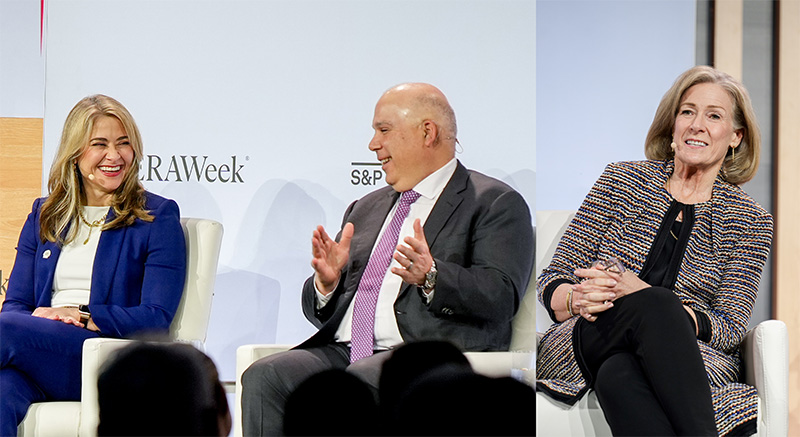
Energy executives gathered to discuss future upstream strategies. The industry experiences renewed financial confidence. Capital flows back into hydrocarbon projects. However, extreme market volatility complicates long-term planning. Companies face shifting geopolitical landscapes. Long-term demand for oil and gas remains uncertain. Industry leaders must navigate these turbulent waters. They must secure durable returns for the next decade.
Seba Borgarello opened the discussion. Borgarello serves as the Global Head of CERA Consulting at S&P Global. He highlighted the current industry paradox. “Upstream is back and capital is back flowing into upstream,” Borgarello stated. “Certainty is not back. Actually, we are probably at the big uncertainty for us in all the shifts.” He pointed to conflicts in the Middle East. He also noted changing policies and unclear demand forecasts. These factors create a perfect storm for the energy sector. Executives must adapt their strategies quickly. They must balance resilience with value creation.
The Enduring Impact of Geopolitics
Geopolitical shocks define the early XXI century. The energy sector faces constant supply disruptions. Executives must plan for unforeseen global events. Linda Z. Cook, Harbour Energy’s Chief Executive Officer, emphasized the enduring nature of price volatility. “The biggest uncertainty has to be oil and gas prices,” Cook remarked. She noted that managing this uncertainty is an industry standard.
Recent years have delivered massive global shocks. Cook highlighted the ongoing global conflicts. “We currently have the war in Iran,” Cook explained. She mentioned the recent redrawing of trade boundaries. These tariff changes impacted supply chains heavily. The war in Ukraine also caused lasting disruptions. A global pandemic preceded all these events. These crises occurred within just the last five years. They caused massive supply and demand shocks.
Companies must build resilient portfolios to survive. Leaders need strategies that withstand tough times. These strategies must also capture upside during market peaks. Scale and diversity offer crucial protection. Lenders and investors demand this stability. Harbour Energy pursued this resilience aggressively over recent years. “You need to protect the balance sheet,” Cook stated. Companies must distribute competitive returns to shareholders. They must also invest carefully for the future.
Designing Resilient Asset Portfolios
A balanced asset mix provides operational stability. Companies blend short-cycle and long-cycle projects. Harbour Energy started with a contrarian strategy. The company initially avoided the United States onshore shale. They focused on conventional producing assets globally. The company now produces 500,000 barrels daily. Their strategy evolved as the portfolio grew.
Cook described this strategic evolution. “It’s like putting together a puzzle, right?” she said. Harbour Energy mixes different project timelines. They execute short-cycle projects in Norway and the United Kingdom. These include single-well tie-backs and near-field exploration. The company recently entered the Vaca Muerta region in Argentina. This move added short-cycle onshore shale to their assets. Simultaneously, Harbour Energy develops major offshore projects in Mexico. This combination provides long-term sustainability.
Francisco Gea serves as Executive Managing Director of Exploration and Production at Repsol. Gea advocates for focused diversification. Repsol maintains an international portfolio across various regions. This strategy provides access to different tax regimes and geologies. The company balances gas exposure in Europe with other global assets. Gea explained the rationale behind this approach. “That strategy of trying to be in a certain number of countries that allow you to more or less hedge, diversify, and have different implications of what’s around our industry helps to navigate this particular year,” Gea stated.
Navigating Global Fiscal Risks
Political instability threatens upstream investments globally. Changing fiscal rules disrupts long-term financial planning. Executives despise regulatory uncertainty above all else. Gea highlighted the frustration of mid-project rule changes. “The first thing that happens to an investment committee is when you are presenting an FID, and you are taking into consideration all those rules… but in the middle of the game, the fiscal or the rules change,” Gea explained. He called this a highly political risk.
The United Kingdom implemented the Energy Profits Levy recently. This windfall tax surcharge heavily impacted the region. Gea noted the detrimental effect on North Sea investments. Repsol and Harbour Energy both suffered from this taxation shift. Gea expressed disappointment in this mature market. The tax changes altered the foundational rules of their investments.
Conversely, Repsol maintains legacy positions in challenging environments. The company operates in Venezuela despite the risks. Gea stressed the importance of stakeholder management. “Because of different political risks from a perspective, enjoying a very happy relationship with different stakeholders on the ground where we are… I encourage people to take a different look,” Gea noted. A well-diversified portfolio offsets these regional risks. Partnerships also mitigate economic exposure significantly.
The Strategic Pull of the Americas
The Americas offer a stable center of gravity. Many companies focus their capital allocation here. The United States provides a massive resource base. Colette Hirstius is the President of Shell USA. She highlighted the strong demand for energy products. Hirstius believes demand will persist through the 2030s. “We haven’t seen the top of peak oil yet,” she affirmed.
The United States transformed its energy position recently. The country shifted from a net importer to an exporter. “It wasn’t until 2019 that we became a net exporter, and we’re now the world’s largest producer of crude,” Hirstius stated. This transformation impacts global market views. Regulatory certainty remains crucial, even in the United States. Hirstius praised the recent resumption of lease sales. Shell and Repsol recently participated in an Alaska lease sale. The previous sale in that specific region occurred in 2019.
Repsol also targets North America aggressively. The company wants a deep portfolio in the region. Gea explained the appeal of the United States. The country offers political stability and a massive demand. Repsol builds its presence in Alaska and the Gulf of Mexico. They will start production in Alaska very soon. However, Repsol retains its international niche. They operate in Latin America and North Africa. This legacy business complements their North American growth.
Artificial Intelligence Drives Efficiency
Technology transforms upstream operational efficiency daily. Artificial intelligence redefines field management and safety. Amerino Gatti is the Executive Vice President of Oilfield Services & Equipment at Baker Hughes. Gatti sees artificial intelligence changing well construction. Digital tools connect reservoir data directly to drilling operations.
Data management remains a critical challenge. Artificial intelligence digests massive data sets quickly. This technology supports subject matter experts directly. Gatti detailed the impact on well interventions. Interventions carry high operational risks. Artificial intelligence shares common practices to de-risk these operations. Gatti translated the risk reduction clearly. “Like a 50% risk or reducing it by 30% with the use of AI and agents supporting application engineers,” Gatti explained. He added that the industry merely scratches the surface of this technology.
Shell uses artificial intelligence to improve safety. Hirstius shared a compelling example regarding offshore platforms. Corrosive environments threaten steel structures constantly. Companies previously sent workers into dangerous areas for inspections. Now, drones and artificial intelligence handle these tasks. “We can use drones and AI to significantly reduce the safety exposure to people,” Hirstius noted. The technology prevents major process safety incidents. Currently, 95% of Shell’s offshore teams interact with artificial intelligence daily.
Capital Discipline Secures the Future
Capital discipline dominates executive decision-making today. Leaders prioritize stable returns over reckless growth. The industry learned from past expansion cycles. Gea recalled the aggressive strategies of previous decades. “20 years ago, it did not fall on me; we were talking about growth, growth, growth,” Gea reflected. Now, companies analyze risks and free cash flow rigorously.
Executives focus on doing the basics brilliantly. Operational excellence drives cost reductions and resilience. Companies must select projects that guarantee profitable repetition. Cook identified the most critical leadership task. “Capital allocation, I think, would be my answer,” Cook stated. She called it the single most important decision for upstream businesses. Leaders must decide how much cash strengthens the balance sheet. They must determine the right return for shareholders.
Gea offered a final piece of advice. He stressed the importance of strategic consistency. Companies prepared plans to navigate this specific cycle. “Stick to the plan,” Gea urged. “We have a plan, and we cannot improvise because of the environment, because of the price, we cannot become crazy with bold movements.” The industry moves forward with cautious optimism. Technology and discipline guide the upstream sector into the future.
More news: Powering the AI Revolution
More: CERAWeek
