


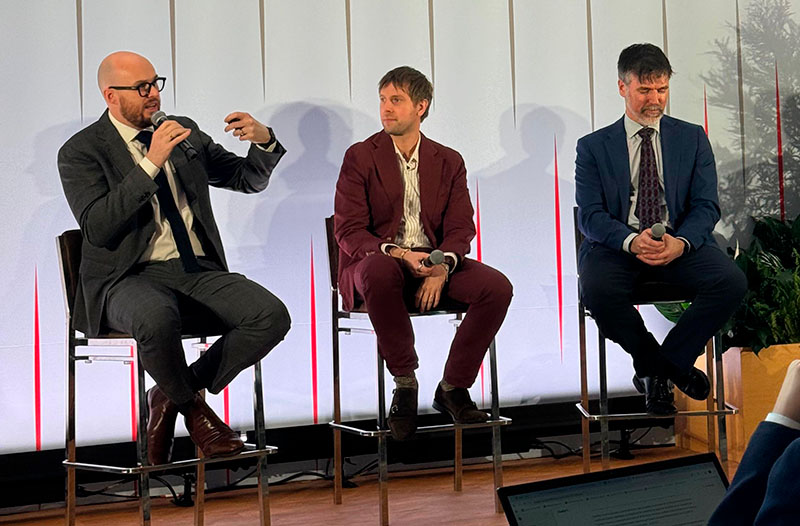
The global energy transition relies heavily on critical minerals. Demand for these resources surges daily. However, supply chains remain incredibly fragile. Industry leaders gathered in Houston for CERAWeek 2026. They discussed these pressing challenges in detail. S&P Global analysts hosted a specific panel. The panel explored durable development amid pricing volatility. Mark Ferguson, Matt Blundell, and Nick Trickett led the discussion. They serve as directors and senior analysts at S&P Global.
The speakers highlighted multiple obstacles facing the industry. Permitting delays create major roadblocks. Geopolitical tensions threaten supply security. Volatile prices disrupt long-term investments. The XXI century economy requires massive material inputs. Electric vehicles use significantly more minerals than traditional cars. Renewable energy grids demand vast amounts of copper. The world needs a stable supply of these materials. Achieving this stability proves increasingly difficult.
Overcoming Permitting and Geographical Hurdles
Extracting critical minerals takes significant time. Companies face major logistical challenges. Securing capital remains a constant struggle. Environmental regulations often delay new projects. Geographical limitations also complicate extraction efforts. One panelist highlighted these severe physical constraints. Extreme weather severely impacts mining operations.
“A lot of that’s just down to permitting as well as being able to access financing,” the speaker noted. They emphasized the harsh realities of northern climates. “And in some cases as well, it’s, you know, such as mines in Canada, where you can only access for 3 months of the year because it’s so cold and everything’s frozen.”
These variables complicate the entire assembly process. Investors demand predictable timelines for returns. Frozen ground halts heavy machinery. Short operational windows reduce annual output. Companies must spend heavily to maintain equipment in freezing temperatures. This drives up the baseline cost of extraction. These logistical nightmares deter potential investors. Consequently, new supply struggles to reach the open market.
National Security Risks and Policy Frameworks
Supply bottlenecks represent more than just economic hurdles. They now constitute severe national security threats. Western governments recognize this growing danger. Policymakers frequently discuss material independence. However, discussions rarely translate into immediate action.
“These supply bottlenecks that are starting to develop or have developed and exist, maybe they’ve existed for quite a long time and are now becoming a national security risk,” a speaker explained. Countries actively develop new policies to address this. Yet, current legislation lacks practical execution.
“A lot of the policy that we’re seeing in the Western world is very much framework,” the panelist added. “We’re not seeing any meat on the bone yet.”
Capital allocation requires long-term market stability. Markets currently move at breakneck speeds. Investors hesitate to commit billions of dollars. They wait for policies to offer concrete financial guarantees. Companies struggle to decide when to finalize investments. Frameworks alone do not build new mines. Without actionable policies, the supply deficit will likely worsen.
The Undeniable Copper Conundrum
Copper remains the backbone of electrification. Analysts presented charts detailing future copper demand. The projected deficit looks incredibly daunting. Some attendees questioned the viability of continuous copper usage. They asked about potential engineering alternatives.
A panelist addressed these substitution concerns directly. Batteries currently require substantial amounts of copper. The material remains essential for intensive wiring needs. Engineers can substitute small amounts in specific parts. However, copper remains largely irreplaceable for efficient conductivity.
Aluminum sometimes serves as a theoretical substitute. Yet, aluminum substitution brings distinct geopolitical complications. The Middle East produces massive quantities of aluminum. Transferring reliance from one region to another poses risks. The global market simply shifts its dependency. Therefore, copper demand will inevitably continue to rise.
The Monopolization of Mineral Refining
Extracting raw ore solves only half the problem. The world desperately needs refining capacity. Currently, a single nation dominates this sector. China controls an overwhelming majority of global mineral processing. This concentration creates massive supply chain vulnerabilities.
A panelist provided stark statistics to illustrate this dominance. “China refines 45% of the global copper,” the speaker stated. This actually represents one of their lower market shares. China processes 98% of the world’s graphite. The country also refines 76% of the global lithium supply.
This level of control dictates global market dynamics. “So when you control that refining process, you kind of control the number, right?” the analyst concluded.
Western nations struggle to build competing refineries. Environmental standards make domestic refining expensive. High labor costs further reduce Western competitiveness. Therefore, raw materials mined globally often travel to Asia. They undergo processing before returning to Western markets. This dynamic leaves Western industries highly exposed to trade disruptions.
Advancing Material Science and Innovation
Technological innovation offers a potential escape route. The energy sector requires significant advances in materials science. History shows that energy technologies take time to mature. Efficiency improves slowly over decades of research. Government support remains crucial for this necessary innovation.
Panelists discussed ongoing research at national laboratories. Scientists actively develop alternative battery chemistries. Some researchers develop non-rare-earth-bearing manganese solutions. This innovation specifically aims to ease supply chain concerns.
Sodium-ion batteries represent another promising frontier. They offer a viable alternative to lithium-heavy designs. Furthermore, Direct Lithium Extraction techniques are gaining traction. This method provides new opportunities to source lithium. It brings new supplies online much faster. It also reduces the environmental footprint of extraction.
The industry explores multiple avenues to secure materials. Substitution helps, but finding new sources matters equally. Innovation hubs continuously test new mineral combinations. These advancements will eventually reshape the entire supply chain.
Silver Price Volatility and Industrial Demand
Silver dynamics generated significant discussion at the conference, as the company recently experienced massive fluctuations. The metal’s value skyrocketed before falling back to earth. Analysts examined the underlying causes of this volatility.
Historically, silver prices have correlated closely with gold prices. The surge in the 2025 gold price lifted silver. However, silver possesses a distinct market advantage. It features a massive underlying industrial use case.
“Ironically, silver has that underlying industrial use case that adds more benefit than, say, you might think in terms of gold,” a speaker noted.
Silver plays a crucial role in solar panels. It conducts electricity exceptionally well. Tech industries rely heavily on silver components. Therefore, silver remains a vital part of the energy equation. Its dual role as an investment and industrial asset creates tension. Investors buy silver to hedge against inflation. Meanwhile, manufacturers need silver to build green technologies. This competing demand drives the current pricing volatility.
The Transition Toward Cheaper Alternatives
High raw material costs force industries to adapt. Manufacturers constantly seek ways to reduce expenses. The recent spike in silver prices accelerated this trend. Companies simply cannot afford exorbitant component costs.
A panelist explained the inevitable market reaction. “Our cost basis obviously skyrocketed, and the reality is that probably starting this year, we will start seeing a lot of transition to copper-based basis.”
Manufacturers prefer copper because it costs less. “On an ounce basis, it’s actually cheaper,” the speaker confirmed.
This transition barely affects the massive copper market. The displaced silver demand remains minuscule relative to total copper consumption. However, this shift will significantly impact the silver market’s future. Losing industrial market share damages silver’s long-term price sustainability. Silver prices will likely face downward pressure moving forward. The market naturally corrects itself when prices peak too high.
Market Forces and Durable Development
Economic principles ultimately govern the critical minerals market. Scarcity drives up prices initially. High prices then incentivize new production and substitution. One analyst summarized this cycle perfectly.
“The cure for high prices is high prices,” the speaker remarked.
This classic industry adage applies to lithium, copper, and gold. When lithium prices soared, exploration companies found new resources. They proved that sufficient lithium remains available globally. Market mechanisms eventually balance supply and demand. However, this balancing act creates immense short-term volatility.
Achieving durable development requires navigating this turbulence carefully. The XXI century energy transition depends on steady mineral supplies. Companies must secure financing despite unpredictable price swings. Governments must transform policy frameworks into concrete actions. The industry must prioritize refining independence and technological innovation. Only through coordinated efforts can the market stabilize. The path forward demands resilience, capital, and strategic foresight.
More news: China Reconfigures Global Trade Through Green Technology Leadership
More: CERAWeek
