


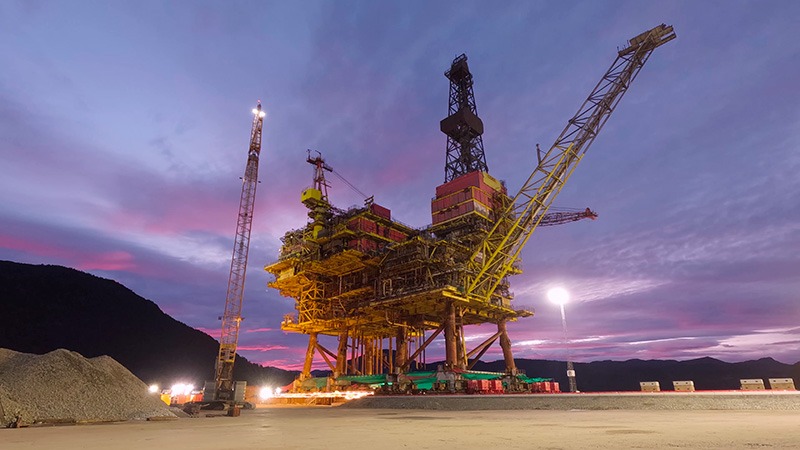
The North Sea oil and gas industry entered a massive decommissioning phase in the XXI century. Companies must retire hundreds of aging offshore platforms safely and efficiently. These colossal structures require specialist equipment and careful planning for complete removal. In 2025, the industry witnessed a major operational breakthrough. Mammoet and Allseas successfully streamlined the decommissioning of two massive topsides.
The sheer scale of these structures demands innovative engineering solutions. The Heather Alpha topside weighed an astonishing 15,300 tonnes. The Eider Alpha topside weighed 11,640 tonnes. Mammoet managed the load-in operations for both structures. The company integrated the load-ins to save valuable time. These projects presented additional technical challenges for the engineers. Mammoet had to ensure its skidding tracks could accommodate the skid shoes provided by Allseas. Workers also needed to offload the topsides quickly. Fast execution minimized operational risks during the load-in procedures.
Removing the topsides sequentially presented a unique strategic opportunity during the planning stage. Engineers prepared the deck of the Iron Lady cargo barge for both topsides simultaneously. This simultaneous preparation saved considerable time and reduced costs. Mammoet installed the necessary grillage and interfacing equipment on the vessel in Rotterdam. The inner beams spread the immense load from the skid tracks onto the barge. These inner beams also matched the height level between the barge tracks and the quayside tracks. Consolidating these removals into a single summer campaign optimized the entire logistical configuration.
Single Lifts and Shallow Water Transfers
Allseas used the Pioneering Spirit heavy lift vessel. The ship removed each structure from the UK North Sea in one lift. This catamaran-style ship features powerful lifting beams. It suspended the topsides securely between its twin bows. Crews then transported the structures to shallower waters. Here, workers transferred them to the Iron Lady. This cargo barge carried them to the disposal yards. Allseas shipped Heather Alpha to Frederikshavn, Denmark. The company transported Eider Alpha to Vats, Norway. Mammoet customized the barge beforehand. This customization accommodated the skid shoes and inner skid beams.
Overcoming Floating Load-In Challenges
The operations required delicate floating load-ins. The barge floated freely in the water during the offloading process. This situation created extreme ballasting challenges. The massive weight transferred gradually from the barge to the quay. Timing remained absolutely critical to prevent accidents. Mammoet engineered hydraulic cylinders for the quayside stabilizer beams. These cylinders created makeshift concrete moorings. The moorings secured the Iron Lady during the ballasting process. Leo de Vette serves as a Project Manager at Mammoet. He discussed the timeline. “The clients wanted us to achieve the load-ins in 24 hours, but we managed it in half of that; a single shift.”
Heavy Push Capacity Delivers Rapid Results
The engineering teams relied on massive hydraulic power. They deployed 40 push/pull units for Heather Alpha. They used 36 units for Eider Alpha. The combined push capacity reached 3,652 tonnes. The equipment pushed the topsides 15 meters per hour. The total distance covered equaled 180 meters. De Vette elaborated on the preparation phase. “To achieve this required a lot of planning and preparation, with us working closely with Allseas to time the installation of our equipment with their skid shoes and ensure everything aligned and went smoothly.”
A Blueprint for Future Operations
The UK offshore energy sector faces a massive decommissioning wave. Experts predict substantial decommissioning expenditures by 2032. About 15% of current oil and gas spending funds these operations. Mammoet previously completed similar work for the Brent platforms. De Vette commented on the recent successes: “This has now become a standard operation for Mammoet. We know the optimum time and steps to set up our equipment on the barge and on the quay. Naturally, supporting Allseas with the Brent topsides helped us, because it was a very similar process. This meant Allseas had full confidence in our method and equipment.”
More news: IAEA and Japan Enhance Nuclear Emergency Preparedness in Fukushima
More: Mammoet
