


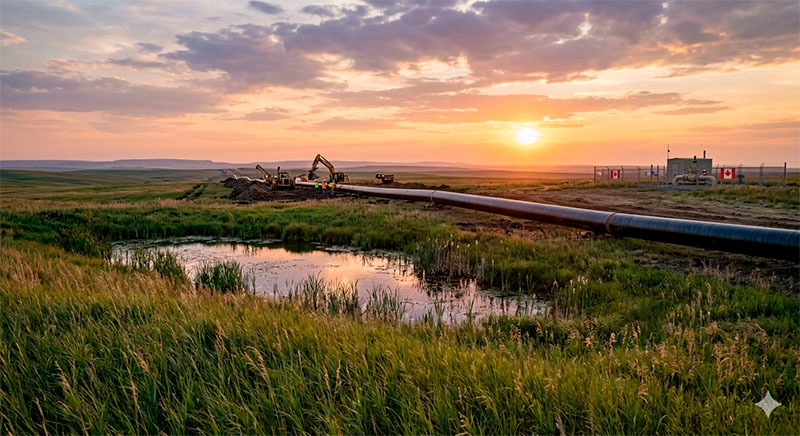
Bakken Pipeline Company LP operates as a subsidiary of Canada-based Enbridge Inc. The permit allows the company to construct and operate a 24-inch diameter pipeline across the international border near Portal, North Dakota.
This infrastructure will transport crude oil and refined petroleum products between the United States and Canada. Approved materials include jet fuel, diesel, kerosene, and natural gas liquids. The authorization specifically excludes natural gas regulated under the Natural Gas Act.
For Native American communities, this development revives memories of past environmental conflicts. Infrastructure projects frequently bisect treaty lands and critical watersheds. Environmental advocates and Indigenous leaders track these developments closely due to the historical impacts of oil transport on local ecosystems.
Pipeline Specifications and Regulatory Oversight
The new border facilities include the pipeline and the first mainline shut-off valve. This valve sits less than 1 mile from the Canadian border. Federal and state agencies maintain strict inspection rights over the project. The Pipeline and Hazardous Materials Safety Administration enforces these safety laws.
Bakken Pipeline Company LP must acquire all necessary right-of-way grants. The company carries full responsibility for environmental indemnification. They must protect the United States government against contamination claims. Data shows that 15% of pipeline spills affect local water sources. Companies must maintain the pipeline in excellent repair.
Executive Powers and Security Measures
The permit outlines specific executive powers regarding national security. The President can revoke this authorization at any time. If revoked, the company must remove the facilities entirely. They must cover all removal expenses themselves. The government can also seize the pipeline during security crises.
In such events, the government guarantees fair compensation to the operator. The operator must report any ownership changes immediately. Enbridge Inc. manages a vast energy network across North America. Their pipelines transport roughly 30% of the crude oil produced in the continent. This massive volume highlights the strategic importance of border infrastructure.
Indigenous Land Concerns and Ecological Context
Burke County sits near several historical Native American territories. Pipeline construction often disturbs sacred sites and environmental resources. Indigenous populations comprise about 5% of the North Dakota demographic. Tribal nations advocate for stricter environmental assessments before construction begins. Spills represent a constant threat to agricultural and tribal lands.
A recent environmental review noted that 90% of new energy projects require extensive ecological monitoring. Native journalists document these infrastructure expansions rigorously. Water protectors continue to emphasize treaty rights. The government requires the permittee to submit sworn operational statements. These reports ensure transparency regarding the facility operations.
More news: Renewal of Enbridge Energy Pipeline Operations
More: TWH
