


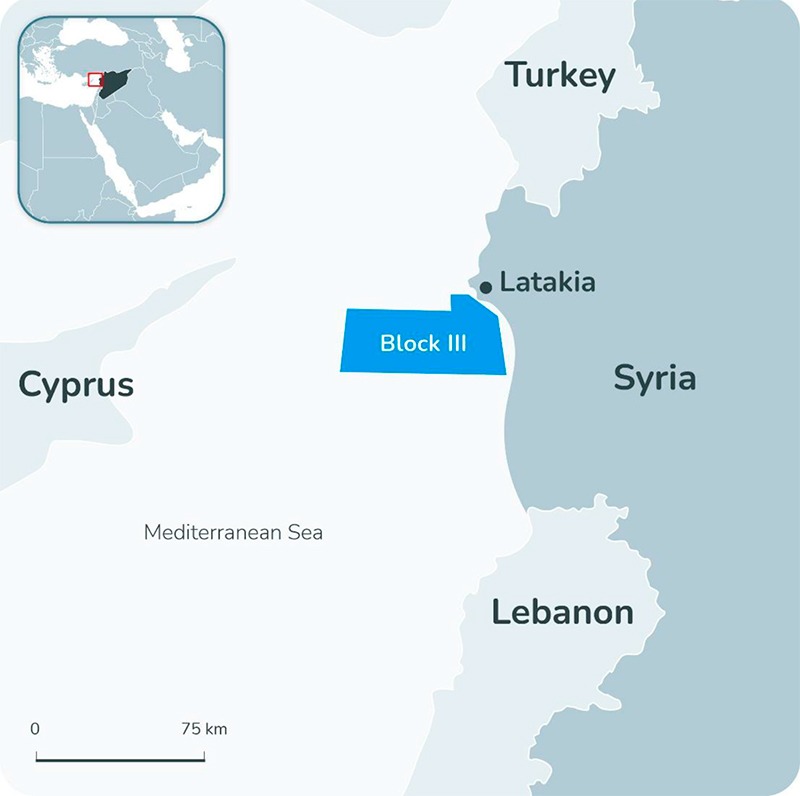
The global energy market witnessed a major development when TotalEnergies, QatarEnergy, and ConocoPhillips executed a memorandum of understanding with the Syrian Petroleum Company. This agreement formally initiates a comprehensive technical review of offshore Block 3, located in the Mediterranean Sea near the coastal city of Latakia. The targeted block features complex bathymetry, with water depths dropping sharply from 100 meters down to 1,700 meters. TotalEnergies operates as the lead entity in this consortium, leveraging deep historical knowledge of the region. Before European Union sanctions forced its exit in 2011, the French corporation produced roughly 53,000 barrels of oil equivalent per day in the country. The new partnership signals a rapid unwinding of historical barriers and establishes a definitive framework for future commercial exploration.
The Syrian Arab Republic desperately needs this massive foreign investment to resuscitate a devastated macroeconomic environment. Prior to the outbreak of armed conflict, the nation operated as a net energy exporter, reliably shipping about 380,000 barrels of oil per day to international markets in 2010. Over a decade of war severely decimated that infrastructure. Currently, more than 90% of the domestic population lives below the poverty line, while an estimated 16.7 million citizens require daily humanitarian assistance. Transitional President Ahmed al-Sharaa assumed leadership following the December 2024 collapse of the former administration. The interim government views this offshore initiative as a critical economic lifeline. Officials expect the energy sector revitalization to stabilize the national currency and generate the hard currency revenues necessary for comprehensive reconstruction.
Navigating the Complex Sanctions Landscape
Western energy conglomerates currently possess the legal authorization to negotiate these agreements due to a sweeping rollback of international sanctions. The United States government systematically dismantled its comprehensive embargo during the summer of 2025. An executive order officially terminated the national emergency and rescinded the restrictive Syrian Sanctions Regulations. The Treasury Department also removed hundreds of designated individuals from official blacklists. Furthermore, legislators included a specific provision in the National Defense Authorization Act for Fiscal Year 2026 to repeal the restrictive Caesar Act completely. This legislative maneuver effectively eliminates the threat of secondary sanctions for international firms. ConocoPhillips brings essential deepwater technology to the consortium while operating under this newly established legal umbrella. The American presence strongly reassures European and Qatari partners regarding regulatory compliance.
The European Union also relaxed major economic restrictions to facilitate reconstruction. Officials removed asset freezes on the Syrian Petroleum Company. This action directly allowed TotalEnergies to sign the recent memorandum. However, corporate compliance departments still face severe challenges. The United Kingdom continues to designate the ruling party as a terrorist organization. Many interim government ministers hold direct ties to this specific group. Therefore, Western firms must implement extreme due diligence measures. Companies must ensure that multi-million dollar investments only flow to sovereign state accounts. Independent auditors will closely monitor all financial transactions. The international consortium plans to enforce strict anti-bribery covenants. This approach effectively imports rigorous Western corporate governance standards into the domestic bureaucracy.
Regional Border Disputes and Geopolitical Rivalries
The Block 3 exploration program faces significant geopolitical hurdles. The northern boundary abuts a highly contested maritime tripoint known as Point 7. Lebanon, Cyprus, and the Syrian state all claim overlapping territorial waters in this zone. Official maritime data reveals a major regional conflict. The Syrian offshore coordinates project into roughly 652 square kilometers of Lebanese waters. Conversely, Lebanese claims encroach upon 69 square kilometers of Syrian oceanic territory. Nicosia and Beirut recently revived a dormant border agreement from previous years. The Lebanese cabinet formally approved this specific deal in October 2025. However, the countries cannot finalize the northern terminus without explicit authorization from Damascus. The new multi-billion-dollar exploration effort places immense commercial pressure on all three nations. Leaders must negotiate a peaceful resolution to secure vital international investments.
The current administration actively replaces legacy Russian operators with Western energy firms. Officials previously terminated the Block 1 concession held by a Russian company. The government cited a blatant breach of contractual obligations. Authorities subsequently awarded that specific offshore area to Chevron. The Block 3 agreement further accelerates this strategic shift away from Moscow. However, the consortium must carefully navigate regional military threats. Turkey aggressively pursues its Blue Homeland naval doctrine in the Mediterranean Sea. Turkish warships previously blocked international drilling vessels near Cyprus. Ankara uses hard military force to assert its own maritime claims. The inclusion of QatarEnergy provides a vital diplomatic backchannel to Turkey. ConocoPhillips also delivers a strong American deterrent against potential naval harassment. This consortium structure deliberately mitigates severe external security risks.
Environmental Vulnerabilities and ESG Implementation
The Mediterranean Sea houses an exceptionally fragile ecological system. The regional coastline completely lacks the infrastructure required to manage maritime pollution. A catastrophic deepwater blowout would devastate the local ecosystem. Historical events clearly demonstrate this severe environmental vulnerability. A structural failure at the Baniyas thermal power station caused a massive oil spill in August 2021. Satellite imagery tracked toxic slicks along the entire coast for three weeks. Ocean currents eventually carried the harmful lipids hundreds of kilometers toward Cyprus. The spill coated coastlines in thick tar and crippled the local fishing economy. The disaster severely disrupted the organic carbon cycle and basic chlorophyll production. State authorities completely failed to contain the environmental damage. Therefore, international operators cannot rely on local emergency response capabilities.
The TotalEnergies consortium will construct an independent environmental protection framework. Modern institutional investors demand extreme adherence to strict environmental mandates. Western supermajors operate under intense scrutiny from activist shareholders and regulatory agencies. TotalEnergies plans to implement world-class safety baselines across all offshore operations. Engineers will mandate the use of advanced subsea blowout preventers. Companies will execute continuous greenhouse gas emission tracking using satellite networks. The operators will pre-stage dedicated rapid-response vessels near the drilling sites. Crews will stockpile specialized chemical dispersants and capping stacks on floating infrastructure. The consortium essentially builds a localized regulatory regime from scratch. This proactive approach protects the biodiversity of the Levantine Basin. The technical review marks a critical turning point for the energy landscape. Commercial success could transform the entire region.
More news: Historic Milestone: Oak Ridge Crews Demolish Two Uranium Facilities in One Year
More: TotalEnergies
