


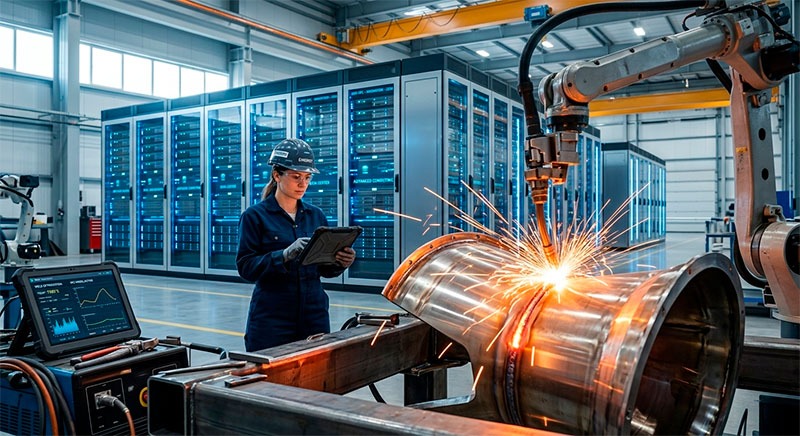
The United States Department of Energy recently announced a massive financial injection to boost domestic manufacturing. Federal officials formally allocated over $10 million for the highly anticipated High-Performance Computing Innovation Program. This exciting initiative finally allows small and medium-sized manufacturers to access the most advanced supercomputers worldwide.
Eligible commercial companies can easily secure up to $400,000 per individual technological project. These federal funds directly aim to solve complex industrial challenges and modernize heavy assembly lines for the XXI century. The energy department urgently wants to accelerate the rapid development of completely new industrial materials.
By successfully leveraging artificial intelligence and machine learning, manufacturing businesses can safely simulate digital models before building physical prototypes. This innovative computational method ultimately saves immense amounts of money and accelerates overall production timelines across various industrial sectors.
Massive Investments Drive Industrial Innovation
The Office of Critical Minerals and Energy Innovation actively oversees this ambitious technological endeavor. Two specific bureaucratic branches strongly support the overall financial program structure. These branches include the Advanced Materials and Manufacturing Technologies Office and the Industrial Technologies Office.
Lawrence Livermore National Laboratory flawlessly manages the complex operational logistics of the supercomputing grid. These organizations formally collaborate to strengthen national supply chains and improve energy system reliability. The program rigidly requires all interested applicants to form strategic professional partnerships. Manufacturers must eagerly team up with universities, national laboratories, or non-profit research organizations.
This collaborative requirement thoroughly ensures that cutting-edge academic research directly benefits commercial assembly lines. Federal officials set a firm operational deadline for the initial program concept papers. Interested manufacturing teams must definitively submit their preliminary application proposals by May 27, 2026.
Strategic Goals and Application Requirements
The application process features specific topic areas for interested manufacturers. The Advanced Materials and Manufacturing Technologies Office focuses on supply chain security. This government office seeks innovative projects that create high-quality domestic jobs. Applicants must propose advanced materials that heavily improve overall energy systems. They must also develop modern processes that significantly strengthen industrial competitiveness.
Simultaneously, the Industrial Technologies Office primarily targets global industrial sector dominance. This division wants technologies that strictly optimize productivity in energy-intensive industries. Successful proposals will effectively reduce the extreme energy intensity of industrial processes. Furthermore, applicants must seamlessly integrate equipment that improves industrial process heating. These mechanical upgrades lower operational costs and enhance product quality significantly. The government explicitly requires 100% of lead applicants to operate within the United States.
The federal government strictly limits eligibility to American manufacturers. International companies cannot apply as primary project leads. However, the program encourages collaboration with diverse domestic institutions. Manufacturers often partner with community colleges and research centers. These academic partnerships drive innovation and build a highly skilled workforce. Selected teams gain exclusive access to federal government supercomputers.
Researchers use these massive machines to run complex digital simulations. For example, a manufacturer can test a new metal alloy virtually. This virtual testing thoroughly replaces incredibly expensive physical trials. It dramatically speeds up the commercialization of new energy technologies. Concept papers determine which teams advance to the final evaluation stage. The department will officially open the full application portal in July 2026. Reviewers expect to notify the selected application teams by October 2026.
Supercomputers Revolutionize Industrial Processes
Modern supercomputers offer unprecedented analytical power to the manufacturing sector. These advanced machines process massive industrial datasets in mere seconds. This speed allows engineers to solve previously impossible problems. Artificial intelligence algorithms identify hidden patterns in production data. Machine learning tools optimize assembly line efficiency automatically.
Consequently, leading manufacturers reduce physical waste and lower their overall operational costs. This initiative directly modernizes factories for the XXI century. Experts predict a significant shift in industrial problem-solving methods. Traditional trial-and-error approaches consume too much time and money. Digital computer simulation provides a vastly superior alternative for modern American businesses. The national laboratories employ top-tier scientists to assist the selected companies. These experts guide the manufacturers through the complex computational processes.
Efficient and Sustainable Manufacturing Practices
The Department of Energy views this program as a critical investment. Global markets demand highly efficient and sustainable manufacturing practices. American companies must adopt cutting-edge tools to maintain their leadership. The High-Performance Computing Innovation Program provides exactly these necessary resources. Financial support removes the barrier to entry for smaller firms. Without this funding, small manufacturers cannot access supercomputers.
Over $10 million in total funding demonstrates a serious federal commitment. Manufacturers hold a unique opportunity to transform their daily operations. Interested parties must act quickly to meet the spring deadlines. The resulting innovations will strengthen the entire national economy. Technology and heavy manufacturing merge seamlessly here to create a highly prosperous and competitive industrial future.
More news: Energy Department Halts Environmental Review for Mexico Pacific LNG Exports
More: DOE
