


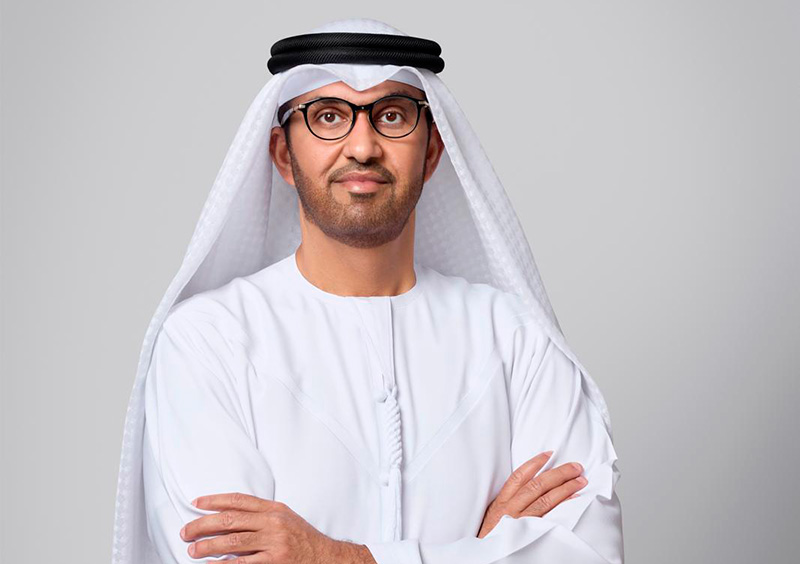
Dr. Sultan Al Jaber delivered a stark warning in Houston, Texas. The executive spoke at the CERAWeek energy conference on March 23, 2026. He condemned recent aggressions in the Middle East. Iran has attacked the United Arab Emirates. Iranian forces targeted commercial vessels and civilian infrastructure. They also hit critical energy installations. Al Jaber labeled these actions as economic terrorism.
He leads the Abu Dhabi National Oil Company. He also serves as the UAE Minister of Industry and Advanced Technology. The official stressed the global impact of these attacks. The Strait of Hormuz faces severe pressure. This pressure harms nations worldwide. The executive stated this constitutes an unprovoked attack. No country should hold the global economy hostage. This crisis represents a profound security threat. It transcends basic supply issues. Global markets demand open trade routes.
Only an open Strait of Hormuz guarantees market stability. The speech resonated strongly with the international audience. Delegates listened closely to the urgent address. Industry professionals understand the gravity of the situation. The stakes for global commerce remain incredibly high. The energy sector faces unprecedented geopolitical risks today. The XXI century heavily relies on uninterrupted supply chains.
A Vital Artery Under Siege
The Strait of Hormuz serves as a critical geographic chokepoint. The waterway spans only 21 miles. Yet, it facilitates massive daily commerce. Ships transport 20 million barrels of oil daily through this channel. This volume represents nearly 20% of the world’s oil and gas supply. The strait also accommodates over 33% of global fertilizer shipments.
Almost 25% of all petrochemicals pass through this narrow throat. Significant quantities of industrial metals also transit these waters. Much of the global economy’s oxygen flows through this single artery. Iran currently seeks to choke this vital route. Al Jaber described this strategy as completely unacceptable. Blocking the strait threatens global prosperity. The global supply chain lacks adequate alternative routes. A closed Strait guarantees severe economic contraction. Industries depend heavily on these specific materials. Farmers need fertilizers to grow food. Manufacturers require the petrochemicals for everyday goods. Energy providers need the oil and gas to generate electricity.
The passage connects the Middle East to global markets. Geographic realities make this route absolutely irreplaceable. The waterway facilitates international trade every single hour. Tankers navigate these waters to supply distant continents. Any disruption causes immediate logistical nightmares. The statistics paint a clear and undeniable picture. The XXI century economy cannot survive without this Strait.
The Shock to Global Markets
The squeeze on Hormuz generates immediate global consequences. Oil prices surged drastically in a remarkably short period. The cost of oil jumped by 50% in just three weeks. This price spike damages economic growth everywhere. It heavily burdens low-income populations. These vulnerable groups simply cannot afford higher living costs. The mounting human cost affects farms and families daily. Tractor fuel costs rise for agricultural producers. Heating and transportation costs soar for average citizens.
Consumers bear the ultimate burden of these aggressive acts. Household budgets shrink as energy costs multiply. Inflationary pressures threaten to destabilize fragile economies. Businesses struggle to plan for future quarters. The financial shockwaves threaten to cause a global recession. Policymakers face difficult choices in the coming months. The 50% increase acts as a heavy global tax. It drains capital from productive economic activities. Al Jaber clarified the nature of this crisis.
He rejected the notion of a simple supply shortage. The executive defined the situation as a severe security crisis. Nations cannot merely trade their way out of this dilemma. Resolving the crisis requires keeping the Strait completely open. The international community must restore physical security to the region. Economic terrorism demands a unified and decisive global response.
International Condemnation Mounts
Global leaders recognize the severity of Iran’s actions. The international community has responded with strong diplomatic measures. A record number of nations currently support United Nations Security Council Resolution 2817. This broad support highlights Iran’s increasing geopolitical isolation. Furthermore, 22 nations issued a powerful joint statement.
This coalition condemned the attacks on commercial vessels. They also denounced the strikes on civilian infrastructure. The joint statement criticized the targeting of energy installations. The world refuses to tolerate these disruptive tactics. Nations demand immediate restoration of safe maritime navigation. Governments worldwide monitor the escalating situation very closely. International law protects the free movement of merchant ships. A united front remains essential for global security.
The joint statement demonstrates a clear international consensus. Nations prioritize maritime law and navigational freedom. The resolution demands an end to erratic, hostile actions. Diplomacy remains the preferred tool for conflict resolution. The UAE actively sought to prevent this conflict. The nation took every possible diplomatic step to avoid hostilities. The country did not ask for this confrontation. However, the UAE maintained a high level of readiness for any escalation. The nation successfully withstood the recent unprovoked attacks.
Corporate Resilience Amid Chaos
The recent attacks directly impacted civilian enterprises. The Abu Dhabi National Oil Company absorbed significant hits. No civilian company should face such military aggression. A company focused on delivering energy should remain off-limits. The attacks tested the company’s defensive capabilities. The enterprise passed these severe tests with high marks. Character and resilience defined the corporate response.
The firm refused to halt its critical operations. It guarantees energy delivery despite the unprecedented challenges. The corporation demonstrated remarkable operational resilience. Management deployed extraordinary measures to protect employees. Employees demonstrated incredible bravery during the unprovoked assaults. The company infrastructure proved highly resilient against physical damage. The company prioritizes worker safety above all else. The firm also focused heavily on customer reliability.
The enterprise works methodically through the ongoing crisis. Management maintains full visibility of the operational situation. The company strives to meet every stakeholder’s needs. These experiences reinforced the organization’s core business model. The company pursues pragmatic progress based on realism. It rejects ideological approaches to global energy challenges. The organization maintains a steady and practical course. It focuses relentlessly on delivering tangible results. Years of deliberate planning enabled this strong response.
Strategic Investments and American Partnerships
Long-term planning heavily influences the UAE’s energy strategy. The nation builds resilience through extensive strategic partnerships. The country treats its commitments with utmost seriousness. Al Jaber noted that the nation’s word serves as its currency. The UAE consistently honors its international obligations. The relationship with the United States remains exceptionally strong. The UAE has invested heavily in American energy infrastructure.
Through various entities, the nation invested over $85 billion. These investments support critical power generation projects. They fund advanced chemical manufacturing facilities. This capital creates jobs across 19 different states. American workers benefit directly from these massive financial commitments. The alliance bolsters both domestic and international energy markets. The $85 billion figure demonstrates deep mutual trust. These funds accelerate the transition to advanced energy systems. The partnership strengthens both nations’ economic foundations. Mutual cooperation yields significant dividends for both populations. The investments secure long-term energy availability.
The United States provides an exceptional depth of resources. America also offers highly attractive investment stability. The UAE actively explores new opportunities across the entire value chain. The nation seeks to expand investments in hard infrastructure. This includes storage facilities and liquefaction plants. It also involves new regasification terminals.
Technology as a Force Multiplier
The current crisis highlights two distinct global visions. One faction actively seeks to spread regional instability. Another group works diligently to promote global prosperity. The UAE chose the path of prosperity long ago. The nation built a highly reliable energy corporation. Disruption occasionally reaches the nation’s borders. However, the country always stays the course during crises.
Modernization protects the company against unforeseen shocks. Artificial intelligence optimizes complex supply chain logistics. Diversification minimizes risk across the entire corporate portfolio. Innovative solutions rapidly address complex logistical bottlenecks. Technological supremacy ensures continued operational success during crises. The firm embraces the future with immense confidence. It rejects the chaos sown by hostile actors. The energy producer continues to diversify its production methods.
The company actively expands routes connecting supply to markets. It integrates all energy sources on a massive scale. Technology plays a crucial role in these operations. The enterprise embeds artificial intelligence across all divisions. AI serves as a vital force multiplier. This technology will define the next energy era. The organization also cultivates a massive global network. These partners believe energy security requires shared responsibility. The XXI century demands collaborative innovation.
A Call to Action for Energy Leaders
The recent events draw a clear line in the sand. Al Jaber presented energy leaders with a stark choice. Professionals can choose to engineer global stability. Alternatively, they can spectate amid rising volatility. The executive championed collaboration over destructive conflict. True stability never materializes completely on its own. Leaders must build it deliberately and collectively. Global leaders must answer this urgent call to action. The upcoming gathering promises to shape future energy policies.
The Abu Dhabi conference offers a crucial platform. Leaders will formulate actionable strategies for the future. The industry must safeguard the arteries of global commerce. Failure to act invites further economic terrorism. The world must stand firmly with prosperous nations. CERAWeek runs from March 23 to March 27, 2026. This event gathers the industry’s top thought leaders. However, the conversation must continue later this year. Al Jaber invited global professionals to the ADIPEC conference.
The event occurs from November 2 to November 5, 2026. The ADNEC Centre in Abu Dhabi will host the gathering. It will function as a critical working session. Attendees will focus on global energy system resilience. The industry must unite to protect global economic health.
More news: Historic Alaska Oil Sale Brings Windfall and Questions for Native Lands
More news: CERAWeek
