


Global energy markets face immense pressure in 2026. A transactional global system creates deep economic fragmentation. Major powers pursue narrow national interests.
Global Power Politics Fracture Amid Middle East Conflict and Shifting Alliances
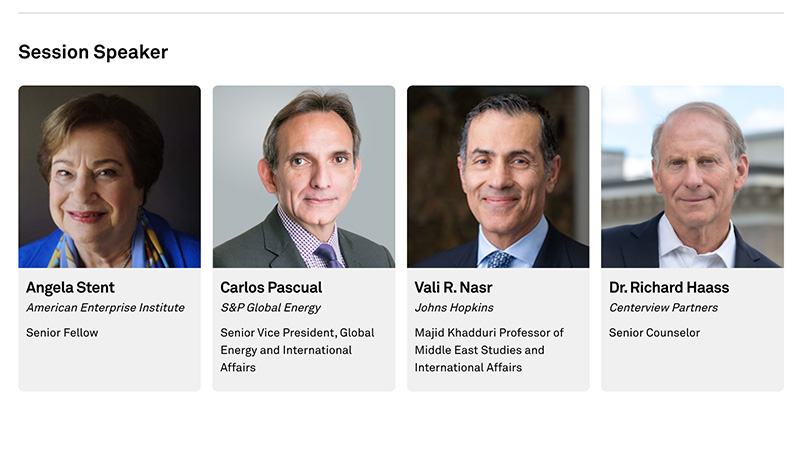
This reality dominated discussions at CERAWeek 2026. Experts gathered to analyze this shifting landscape. Carlos Pascual chaired the pivotal panel. He serves as Senior Vice President of Global Energy and International Affairs at S&P. Pascual outlined a world moving away from multilateral norms. Industrial policies and export controls reshape commodity flows. Geopolitical blocs threaten global economic stability. Energy demands grew by 3% globally in 2025.
This growth collides directly with supply chain disruptions. The panel featured top international relations scholars. Vali R. Nasr, Angela Stent, and Dr. Richard Haass provided profound insights. They explored the widening conflicts in the Middle East. They analyzed the ripple effects reaching Russia and China. Leaders must understand these dynamics to navigate the 21st century. The current era demands extreme strategic adaptability.
A Shift in American Strategy
The current United States National Security Strategy reveals a dramatic pivot. Dr. Richard Haass analyzed this fundamental policy shift. Haass works as Senior Counselor at Centerview Partners. He highlighted the new priorities in Washington. The strategy emphasizes commercial relations over traditional alliances. Officials now focus heavily on the Western Hemisphere. The Western Hemisphere accounts for nearly 40% of new trade initiatives.
Policymakers largely abandoned previous efforts at nation-building. The policy shows little interest in promoting democracy abroad. Leaders view international institutions with deep suspicion. The administration even displays open hostility toward Europe. Haass noted the strategy treats Europe poorly. He compared the administration’s view of Europe to a large university. Haass noted, “It almost changed Europe as a large Ivy League university filled with low values and obsession with climate change.”
This approach drastically alters global expectations. Allies feel abandoned by the transactional nature of Washington. The strategy specifically warned against deep involvement in the Middle East. Yet, the region remains an unavoidable entanglement. Global events quickly derailed the isolationist blueprint. The United States finds itself deeply involved in Middle Eastern conflicts.
The Middle East Dilemma
The conflict between Israel and Iran dominates international concerns. Vali R. Nasr detailed the Iranian perspective. Nasr serves as the Majid Khadduri Professor at Johns Hopkins University. He argued Washington lacks a coherent Middle East strategy. Iran perceives the United States as simply following Israel’s lead. Tehran learned crucial lessons from recent military engagements.
The Iranian regime reorganized its command structure to ensure survival. Officials decentralized power to prevent total state collapse. They operate a partisan war through an asymmetric mosaic structure. Nasr explained that Iran views the conflict as a fight for existence. Nasr stated, “They don’t fight this war against the United States. Total state collapse, that is their mindset.” Israel approaches the conflict with vastly different goals. Israeli leaders want to eliminate Iran’s power projection capabilities entirely.
They view the current situation as a unique opportunity. They seek a permanent change in regional dynamics. These conflicting objectives make a quick resolution impossible. Iran uses limited missile strikes to deplete Israeli interceptors. Nasr noted that intercepting 100% of incoming attacks proves impossible. The region faces a prolonged and devastating struggle.
Asymmetric Warfare and Unclear Objectives
The ongoing war exposes severe strategic asymmetries. Haass drew parallels to previous American conflicts. He quoted former Secretary of State Henry Kissinger regarding Vietnam. Haass recalled, “The Vietnam wins when they don’t lose. Whereas the United States is a great power. We lose when you don’t win.” This dynamic perfectly describes the current Middle East standoff.
Iran achieves victory simply by surviving the onslaught. The United States and Israel require definitive military triumphs. Haass criticized the overreliance on metric-based military assessments. Officials often cite the destruction of thousands of targets. Haass warned against confusing tactical wins with strategic success. Haass noted, “It reminds me a little bit of the body count line. Military accomplishment is true but that doesn’t necessarily lead to victory.”
Washington has not defined achievable end goals. Regime change remains an unrealistic objective through military force alone. Israel pursues an open-ended military struggle in Gaza and Lebanon. They aim to permanently degrade Iranian influence. This approach guarantees a continuous cycle of violence. True victory requires a comprehensive political strategy.
High Stakes for Gulf Nations
Neighboring Gulf states watch the escalating violence with immense dread. These nations spent years building successful economic models. They desperately need regional stability to attract foreign investment. Foreign direct investment dropped by 15% in regional conflict zones recently. The current war places their ambitious futures at extreme risk. Nasr reported deep frustration among regional leaders.
Gulf officials feel ignored by Washington planners. Nasr revealed, “In my conversations with the neighbors privately, they are furious over the lack of consultation.” The conflict jeopardizes their long-term development dreams. Leaders in Riyadh and Abu Dhabi worked hard to prevent this war. Saudi Arabia had previously pursued diplomatic detente with Iran. Now, they find themselves caught between competing powers. A surviving, radicalized Iranian regime poses a severe threat to Gulf security.
However, a prolonged war destroys the regional economy. Gulf leaders urged the United States to finish the conflict quickly. They cannot endure years of instability. Economic prosperity requires a highly secure environment. The current geopolitical climate offers zero guarantees. These nations must hedge their economic bets carefully.
Diplomatic Avenues and the Strait of Hormuz
Finding a diplomatic off-ramp proves incredibly difficult. Iranian demands remain maximalist and uncompromising. Tehran wants complete sanctions relief and economic compensation. They also demand the removal of American military bases. These terms represent a non-starter for Washington and Jerusalem.
Haass proposed aggressive measures to force a negotiation. He suggested blockading the Strait of Hormuz. The Strait of Hormuz handles roughly 20% of global oil consumption. A blockade would choke off Iranian oil exports completely. This action targets Iran’s primary revenue source. Haass argued this military option requires fewer resources than convoying tankers. He also floated a radical idea for long-term management. Haass proposed creating a Strait of Hormuz authority. This body would charge tolls for vessels transiting the waterway.
Haass stated, “I can imagine a Strait of Hormuz authority that would be in the GCC countries and Iran.” The authority would share collected fees among regional powers. This mechanism could provide financial incentives for peace. However, any deal requires removing enriched uranium from Iran. The nuclear threat remains the central catalyst for ongoing military action.
Russia Capitalizes on the Chaos
The Middle East conflict provides a massive strategic windfall for Russia. Angela Stent analyzed Moscow’s highly advantageous position. Stent works as a Senior Fellow at the American Enterprise Institute. She explained how the war diverts crucial resources from Ukraine.
Western nations previously sent Patriot batteries to Kyiv. Now, the military redirects those air defense systems to the Middle East. This diversion severely weakens Ukrainian defenses. Russia exploits this vulnerability to press its offensive. Stent noted, “Most of the weapons of the European allies were mined and given to Ukraine. Then they have now been used in this war and they have been expanded.” The global focus has shifted entirely away from Eastern Europe. Diplomatic attention centers completely on the Israel-Iran crisis.
This distraction allows Vladimir Putin to operate with less scrutiny. Russia lost up to 30% of its revenues from oil initially. However, the current chaos stabilized their strategic footing. Stent also mentioned potential Russian involvement in nuclear negotiations. Moscow previously offered to take back Iran’s enriched uranium. This role could help Russia reduce its international isolation. Russia currently has zero interest in ending the Middle East war.
China and the Indo-Pacific Ripple Effect
China also reaps significant benefits from American distractions. The United States continues to deplete its military stockpiles rapidly. Haass identified this as a critical national security failure. The American defense industrial base cannot meet current demands. The United States defense base operates at only 60% of required capacity.
Factories fail to produce modern weapons quickly or cheaply. This shortage directly threatens deterrence efforts in the Indo-Pacific. Taiwan feels acute pressure due to the lack of American storage capabilities. The weapons expended in the Middle East cannot protect Taipei. China watches this dynamic closely. Beijing meticulously insulated its economy from Middle Eastern shocks. They built massive strategic petroleum reserves to guarantee energy security.
China still receives Iranian oil shipments despite global tensions. They benefit significantly as American influence wanes globally. Haass noted that American military actions often backfire. Haass observed, “Another American use of military force that we initiated is rebounding to China’s benefit.” Beijing exploits these unforced errors to expand its global reach. The shift toward a multipolar world accelerates rapidly.
Navigating the Transactional Era
The XXI century demands a completely new strategic playbook. The old multilateral order has fractured completely. Nations now engage in nakedly transactional relationships. Leaders base decisions strictly on short-term national interests. This environment heavily favors agile, opportunistic states. Russia and China navigate this chaos with ruthless efficiency.
The United States struggles to align its domestic politics with global responsibilities. Energy markets will experience extreme volatility in this decade. Corporations must build resilient supply chains to survive. Governments need to reinvest heavily in defense industrial bases. Global defense spending increased by 8% last year alone. Leaders must also pursue pragmatic diplomacy over ideological crusades. The Middle East will remain a volatile flashpoint for years.
The transition away from fossil fuels adds another layer of complexity. Nations that control critical minerals will wield immense geopolitical power. China supplies almost 80% of critical minerals needed for advanced technology. The world faces a highly dangerous period of transition.
More news: Ford CEO Jim Farley Addresses Global Electric Vehicle Competition
More: CERAWeek
