


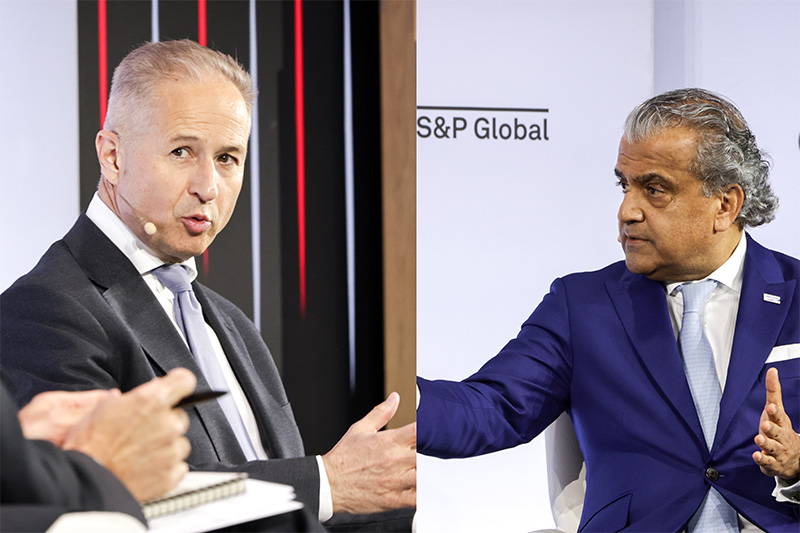
Europe faces a profound industrial challenge in 2026. Global energy markets remain unstable. The continent struggles to secure decarbonization alongside economic prosperity. S&P Global Senior Vice President Carlos Pascual highlighted this struggle at the CERAWeek 2026 conference. He noted the urgent need to address European industrial competitiveness.
Russia severed fuel supplies to Europe years ago. This action triggered a massive debate. Policymakers emphasized switching to alternative fuels. Officials wanted to accelerate the energy transition quickly. Good intentions drove these new regulations. However, these regulations created severe economic impacts. National security now intersects directly with energy policy. Pascual observed that a lack of competitiveness guarantees systemic failure.
Geopolitical conflicts continually activate these issues globally. The XXI century demands a highly pragmatic approach. Companies must navigate a very complex landscape. Leaders recognize the necessity of a robust domestic manufacturing base. This manufacturing base must produce the next generation of energy hardware. Moving from policy targets to industrial execution represents the ultimate challenge.
The Staggering Cost of Conflict
Global disruptions exert extreme pressure on European economies. German Federal Minister for Economic Affairs and Energy Katherina Reiche detailed the financial damage. Conflicts in the Middle East compound existing issues. Energy prices experienced a dramatic and sudden shock. Experts call this the largest supply disruption since the 1970s.
Germany recently started a slight economic recovery. The nation emerged from a long recession period. However, continued conflict directly increases local inflation. Reiche warned of severe financial consequences for the nation. “If this conflict continues, it will definitely affect the energy bill and inflation, rising up to a 40 billion damage by 2027,” Reiche stated. This immense pressure forces the government to reshape energy policy.
Officials must embrace pragmatism and basic realism. Renewable investments require substantial and immediate infrastructure costs. Heavy regulations and levies push energy prices higher. Structural reforms remain completely necessary for survival. Labor market reforms and new technology investments drive future growth. Without these measures, economic growth will stall permanently.
Supply Chains Under Siege
Supply chain resilience dictates long-term industrial survival. OMV Chief Executive Officer Alfred Stern emphasized the dangers of single-source dependency. The 2022 energy crisis served as a brutal awakening. For 60 years, OMV received gas supplies exclusively from Gazprom. Europe realized its extreme vulnerability during this period. Diversifying energy supplies represents a critical short-term strategy.
Current physical disruptions remove essential resources from the global economy. Petroleum products and Russian gas simply do not exist in the accessible market. This sudden absence severely affects fertilizers and petrochemicals. Stern stressed the urgent need for a cohesive industrial strategy. The industry needs “to urgently focus on energy security strategy and on energy sovereignty,” Stern remarked.
Leaders must explore regional opportunities to close the supply gap. The Neptune Deep project in the Black Sea offers one distinct solution. This single project could supply 3% of European gas by next year. Companies must explore further opportunities in the region. Europe will remain a net gas importer until 2050. Domestic production in Norway and other nations continues to decline. Import dependency will inevitably increase over time.
The Reality of Refining
The European refining sector faces an existential crisis. VARO Energy Chief Executive Officer Dev Sanyal explained the stark physical realities. Companies ignored the laws of physics and basic economics for years. Policymakers focused entirely on a single dimension of decarbonization. Sanyal described the policy period between 2015 and 2022 as a journey from Paris to Jupiter. During this period, leaders made major policy announcements without practical grounding.
Recent geopolitical events highlight the absolute need for resilience. Sanyal leads the third-largest biofuel producer globally. VARO Energy also ranks as the second-largest renewable fuel producer in Europe. The company generates roughly 100 million in revenue. Sanyal champions a twin-engine strategy for survival. One engine focuses on making conventional energies more efficient and reliable. The second engine focuses on transition technologies like biofuels. Europe has not built a new refinery in decades.
The last facility opened in Leipzig at the turn of the millennium. Since then, companies shut down 28 refineries across Europe. Consequently, Europe imports 15 million tons of diesel and 25 million tons of jet fuel. Episodic price spikes will continue naturally. Oil prices recently spiked 30% in a single day. “Fundamentally, what individuals are looking at today is the realities of decisions taken over many decades,” Sanyal observed.
Policy Clarity and Power Demand
Policy clarity drives crucial industrial investments. Frequent regulatory changes destroy vital investment certainty. Sanyal praised recent German efforts to streamline energy regulations. Clear targets allow businesses to plan effectively. Changing perspectives mid-stream prevents financial scaling. Scale ultimately brings favorable economics to the market. Meanwhile, power demand skyrockets across the entire continent.
Data centers require massive amounts of continuous electricity. Data center power consumption in Europe will grow 150% soon. Demand will jump from 96 terawatt-hours to 236 terawatt-hours in the next decade. This rapid expansion forces incredibly difficult choices. Companies must react to a rapidly changing set of requirements.
Sanyal advised businesses to focus heavily on operational excellence. Good operations build asset resilience automatically. He also recommended following consumer demand closely. Getting too far ahead of the curve creates severe isolation. Short-cycle investments help fix structural gaps quickly. Both public and private sectors must adopt a more expansive view. Without investment clarity, the European industrial core will simply deteriorate.
Fostering Technological Neutrality
Europe must leverage its unique regional strengths. Stern highlighted the highly educated European workforce. Good infrastructure and high wealth levels provide a strong foundation. Innovation and technology remain the keys to forward momentum. However, regulations must support innovation rather than defining specific technologies. Industry experts understand technological development better than policymakers. Competing technologies eventually reveal the best solutions.
OMV transformed its main facility into a refinery of the future. The company produces fuels from recycled waste and green hydrogen. Current European regulations impose counterproductive mandates on these efforts. The Net Zero Industry Act forces oil and gas companies to implement carbon capture. Companies face massive penalties if they fail to provide carbon capture and storage. This requirement ignores actual customer demand. Such mandates artificially raise energy costs.
The Refuel EU directive imposes similarly rigid constraints. The directive mandates a 2% sustainable aviation fuel blend in 2025. It then requires a massive jump to a 20% blend by 2035. Stern questioned the feasibility of this aggressive timeline. Rapid capacity expansion creates massive financial burdens. Such prescriptive regulations increase the cost of innovation significantly. OMV focuses on practical, scalable solutions instead. The company plans to supply 20,000 households in Vienna with geothermal heating soon.
Reviving European Innovation
Excluding potential technologies harms long-term climate goals. Minister Reiche criticized the premature dismissal of innovative solutions. Innovation cycles move incredibly fast in the XXI century. Relying solely on current wind and solar technologies is dangerously naive. European engineers possess a strong history of solving complex problems. Policymakers must stop ignoring viable inventions.
Reiche cited thermal solutions, fuel cells, and advanced fusion as necessary options. “To say now they do not want to have it because it does not help the problem now excludes a possibility for the future,” Reiche argued. Governments must fund fusion and reconsider nuclear technologies. Baseload power must remain completely free of carbon dioxide emissions. In the interim, nations must diversify their energy portfolios.
Europe possesses unexplored resources that require immediate attention. Reiche advocated for co-investing in European exploration efforts. Germany supports exploration cooperation with nations like Romania. Sanyal agreed that engineering competence must merge with innovation. Leaders must return to fundamental objectives. Companies and governments must choose resilience alongside emissions reductions. This framing creates a completely different conversation about the future.
The Path to Reshore Value Chains
Reshoring critical energy value chains requires immediate action. The transition depends on a successful domestic manufacturing rebirth. Energy-intensive sectors need reliable and affordable power to survive. Policymakers must avoid crushing the economy in pursuit of sustainability. Reiche noted that past governments closed 20 gigawatts of energy capacity. Now, Germany must invest heavily in gas power plants.
The nation plans to add 12 gigawatts of gas power in 2026. Officials plan to add up to 25 gigawatts by 2027. Long-term contracts for liquefied natural gas remain completely essential. The molecule base of the economy requires careful protection. Taxes and methane regulations make local production highly uncompetitive. Implementing quotas for biofuels or blue hydrogen offers a better path. Reducing levies directly on the energy price helps tremendously.
This reduction creates a much better framework for industrial success. Infrastructure forms the vital foundation for all public and private partnerships. Putting a ban on resource exploration damages European interests. Maintaining consistency in standards allows businesses to operate effectively. Ultimately, Europe must balance the physics of energy with economic reality.
Embracing a Pragmatic Transition
True energy security requires a pragmatic approach to the transition. Industrial execution must replace mere policy targets. Leaders cannot ignore the fundamental laws of economics any longer. Sanyal pointed out that optionality creates ultimate resilience. Having multiple options for feedstocks guarantees operational continuity. Maintaining varied export and import routes provides crucial flexibility.
Companies must stop utilizing purely deterministic strategies. The geopolitical landscape of the XXI century remains incredibly volatile. Sudden shocks will disrupt global markets periodically. OMV recognizes this reality and adapts its business models accordingly. Stern believes that local strengths will determine global success. Educated workforces and solid infrastructure give Europe a distinct advantage. However, regulators must allow companies to utilize these advantages fully.
Reiche echoed this sentiment strongly during the conference. Governments must support base-load power generation comprehensively. Closing reliable energy sources prematurely causes immense economic damage. Future investments must balance environmental goals with economic survival. The continent must reinvent its industrial core immediately. Only a comprehensive strategy will secure both prosperity and decarbonization.
More news: Upstream strategies for the next decade
More: CERAWeek
