


The ongoing conflict in the Middle East has created the most significant energy shock of recent years. Military actions have severely disrupted oil and gas flows across the region. Energy markets face the largest supply disruption in history.
The Executive Director of the International Energy Agency called this the greatest threat to global energy security ever recorded. Brent crude futures jumped by more than 60% in March 2026. The European natural gas benchmark, Dutch TTF, also rose by over 60%. Oil producers in the Gulf region cut total oil production by more than 11 million barrels per day. The situation escalates quickly as local storage facilities fill up rapidly. Crude and oil product flows have plunged dramatically.
Before the war, roughly 20 million barrels per day moved through the region. Now, only a trickle reaches the open ocean. Shipping companies have halted traffic almost entirely. Producers lack sufficient pipeline capacity to bypass the affected waterways. Supply losses will inevitably increase without a rapid resumption of maritime trade. The entire global economy faces massive inflationary pressure due to these constraints.
The Strait of Hormuz Chokepoint
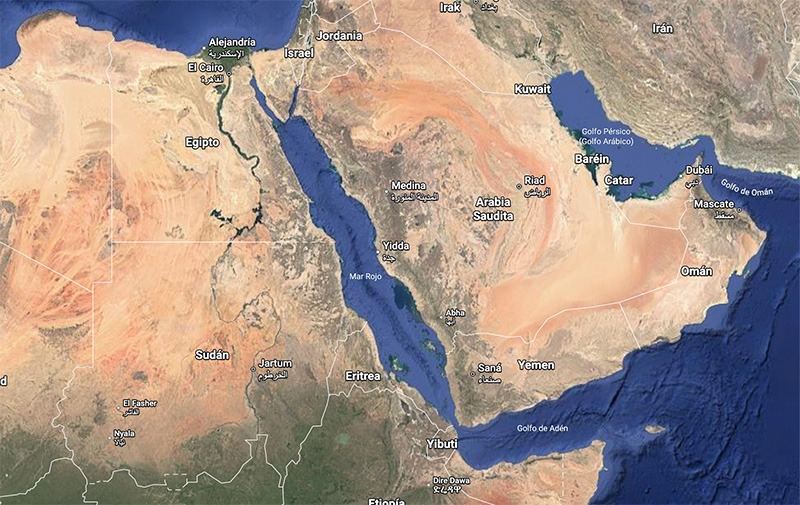
The Strait of Hormuz acts as the most critical trade artery for global energy. This narrow sea passage separates the Arabian Peninsula and Iran. It connects the Persian Gulf directly with the Arabian Sea. Saudi Arabia, the United Arab Emirates, Kuwait, Qatar, Iraq, Bahrain, and Iran rely heavily on this route. Around 25% of the world’s seaborne oil trade transited this strait in 2025.
Currently, the conflict has essentially halted all commercial traffic through the passage. Options for oil flows to bypass the Strait of Hormuz remain extremely limited. Saudi Arabia and the United Arab Emirates possess the only operational bypass pipelines. These alternative routes only provide between 3.5 million and 5.5 million barrels per day of capacity.
This capacity cannot replace the regular maritime traffic. Other exporting nations rely entirely on the strait to deliver their oil exports. Asian markets suffer the most from this geographical chokepoint. In 2025, about 80% of oil products transiting the strait traveled directly to Asia. These major economies now scramble to find alternative energy suppliers.
Natural Gas Markets Take a Massive Hit
The Gulf region produces massive quantities of liquefied natural gas. The war has significantly impacted this crucial output. Global supply of liquefied natural gas dropped by around 20% recently. Disrupted transit routes reduced daily supplies from Qatar and the United Arab Emirates. These two nations have lost over 300 million cubic meters of daily exports since early March 2026.
This translates into a loss exceeding 2 billion cubic meters every single week. Furthermore, attackers struck the Ras Laffan facility in Qatar on March 2, 2026. This massive site operates as the largest liquefaction facility in the world. It remains completely offline today. Regional gas production also suffers from the widespread closure of oil fields. Oil production usually extracts associated natural gas simultaneously. Shutting down oil wells automatically cuts this associated gas output.
Historically, over 110 billion cubic meters of liquefied natural gas passed through the Strait of Hormuz in 2025. This represented 93% of Qatari exports and 96% of Emirati exports. Approximately 90% of these volumes went straight to Asian markets. Consequently, natural gas prices in Asia have skyrocketed to attract available cargoes.
Refined Oil Products Face Severe Shortages
The Middle East region also functions as a central hub for refined petroleum products. Gulf producers exported 3.3 million barrels per day of refined oil products in 2025. They also exported 1.5 million barrels per day of liquefied petroleum gas last year. Today, attacks and export barriers have shut down massive industrial complexes.
Companies have closed more than 3 million barrels per day of regional refining capacity. Refiners located outside the Middle East also face major operational hurdles. They worry constantly about the availability of raw crude materials. Consequently, international refineries have curtailed their regular processing runs. Markets for middle distillates exhibit extreme tightness right now.
Diesel and jet fuel benchmark prices more than doubled across Asia in March 2026. Global refineries possess very little flexibility to increase diesel and jet fuel output. Sustained supply losses will likely cause severe fuel rationing globally. The transport sector faces imminent disruptions without immediate market corrections.
Historic Emergency Oil Stock Release
The International Energy Agency coordinates collective responses to major supply shocks. Ensuring global energy security drives the fundamental mission of this international organization. Member countries must maintain emergency oil stocks continuously. Regulations require members to hold at least 90 days of net oil imports.
On March 11, 2026, member countries agreed to execute an emergency collective action. They released 400 million barrels of emergency oil stocks into the open market. This represents the largest release ever coordinated by the agency. Previous collective actions occurred in 1991, 2005, 2011, and twice in 2022. The current release largely involves raw crude oil from American reserves. European nations primarily contribute refined oil products to this massive market intervention.
Fortunately, oil-consuming nations hold significant petroleum inventories to bridge temporary gaps. Assessors currently place global observed inventories at more than 8.2 billion barrels. This figure represents the highest total level recorded since February 2021. Advanced economies hold approximately half of these vast global reserves. Governments control 1.25 billion barrels for emergency purposes. Industry players hold another 600 million barrels under strict government obligations.
Impacts Extend Beyond Fossil Fuels
The maritime disruptions in the Middle East affect far more than just energy markets. Several critical global commodities rely heavily on safe passage through the Strait of Hormuz. Agricultural sectors face severe threats from restricted fertilizer shipments. More than 30% of the global urea trade moves through this specific maritime chokepoint.
The strait also handles about 20% of international ammonia and phosphate shipments. These severe disruptions create massive risks for global food security and agricultural pricing. Furthermore, the Gulf region generates around 8% of the global aluminum supply. Manufacturers utilize this versatile metal heavily in construction and renewable energy technologies. Cargo ships normally transport about 5 million tonnes of aluminum through the strait annually. Smelters in Bahrain, Qatar, Saudi Arabia, and the United Arab Emirates produce these vital materials.
Global sulfur markets also depend heavily on regional stability. Around 50% of the global seaborne sulfur trade moves through the Strait of Hormuz. Chemical producers use sulfuric acid to manufacture fertilizers and refine critical minerals. Restricted sulfur shipments directly threaten the global production of copper, nickel, and zinc. The modern global economy remains deeply intertwined with Middle Eastern stability.
Demand Adjustments and Policy Responses
Global governments actively implement new measures to mitigate this massive energy shock. High prices naturally force consumers to reduce their daily energy consumption. The International Energy Agency actively catalogs these government actions through a dedicated policy tracker. Several nations have already initiated strict natural gas rationing protocols.
Authorities prioritize essential heating and electrical generation over heavy industrial usage. Policy makers urge citizens to conserve power during peak demand hours. Some countries offer financial incentives for immediate energy efficiency improvements. Transportation sectors also face strict new fuel conservation mandates. Logistics companies redesign shipping routes to minimize fuel consumption wherever possible.
Aviation authorities encourage airlines to optimize flight paths and reduce fuel loads. These demand adjustments help balance the immediate loss of Middle Eastern supplies. However, conservation alone cannot replace the massive volumes currently trapped in the Gulf. Market experts urge rapid investment in alternative energy sources to build long-term resilience. Developing domestic energy infrastructure provides the best defense against future geopolitical shocks.
Market Volatility and Future Projections
Financial markets respond aggressively to these unprecedented supply chain disruptions. Traders price significant risk premiums into all future energy contracts. Volatility metrics across major commodity exchanges reached historic highs recently. Energy analysts struggle to model accurate price forecasts for late 2026.
The sheer scale of the absent Middle Eastern barrels breaks traditional forecasting models. Institutional investors rapidly shift capital away from energy-intensive manufacturing sectors. Technology companies and renewable infrastructure funds attract this newly displaced capital. Meanwhile, emerging market economies face catastrophic currency pressures. High dollar-denominated energy prices destroy their foreign exchange reserves. Central banks in developing nations must aggressively hike interest rates to defend their currencies.
These monetary policies inevitably slow global economic growth. Major financial institutions now project a significant global manufacturing recession. Factory output across Asia and Europe already shows clear signs of contraction. Only a swift resolution to the Middle East conflict can prevent deeper economic damage. The global community watches the diplomatic efforts with extreme anxiety.
Long-Term Consequences for Global Trade
The current crisis forces a complete reevaluation of international supply chains. Dependence on a single geographic chokepoint creates unacceptable risks for modern economies. Energy companies now accelerate their search for diversified supply networks. The shock to the liquefied natural gas market proves especially transformative.
Planners expected a new wave of capacity to stabilize markets by the end of this decade. Now, investors question the reliability of centralized mega-facilities. Distributed energy generation attracts unprecedented levels of new capital investment. The vulnerability of the Strait of Hormuz highlights the fragility of globalized commerce. Asian economies recognize their extreme exposure to Middle Eastern conflicts. They now actively secure long-term contracts with suppliers in the Americas and Africa.
European markets accelerate their transition toward renewable energy technologies. Geopolitical tensions fundamentally alter the mechanics of international energy trading. The events of early 2026 will permanently reshape how nations secure their vital resources. The era of unquestioned reliance on Middle Eastern exports has officially ended
More news: Balancing Biofuel Bridges with E-Fuel Scalability
More: IEA
