


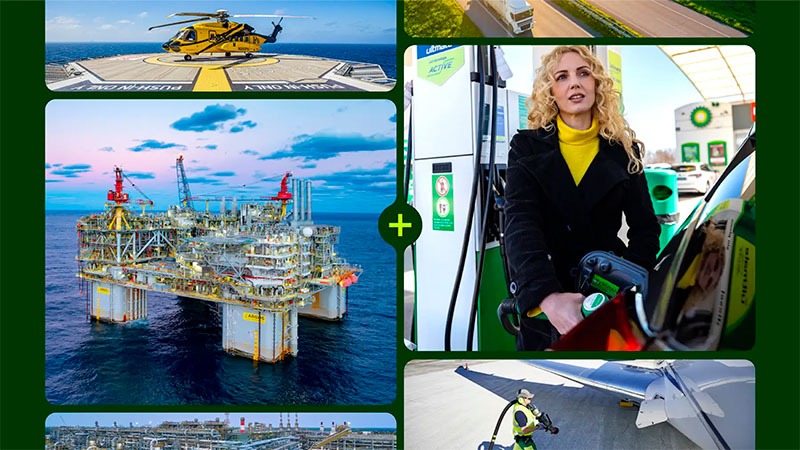
British energy giant BP announced a major corporate restructuring on June 8, 2026. Chief Executive Officer Meg O’Neill revealed a plan that transitions the multinational corporation from three operating units into two distinct business segments. The new framework takes effect on July 1, 2026. Company executives intend to accelerate delivery, reduce internal complexity, and strengthen overall execution through this reorganization.
This strategic shift reflects concrete actions BP takes to streamline its global portfolio and reduce operational costs. The leadership team prioritizes tight capital expenditure discipline and actively strengthens the corporate balance sheet. These steps aim to grow value and increase financial returns for global investors.
The previous organizational model comprised three segments: production and operations, gas and low carbon energy, and customers and products. BP eliminates this tripartite system to clarify accountabilities and enable faster decision-making across the board. The upcoming two-segment structure divides the company into Upstream and Downstream divisions. Gordon Birrell assumes the role of executive vice president for the Upstream segment.
Concurrently, Richard Harding steps into the position of interim executive vice president for the Downstream segment. Both executives bring decades of operational experience to their respective leadership positions. Human resources personnel currently conduct a recruitment process to identify and appoint a permanent executive for the Downstream role.
While the internal operational shift happens in 2026, external financial reporting adjustments require additional implementation time. International Financial Reporting Standards mandate specific timelines for corporate financial transitions. Consequently, the company maintains its current three-segment reporting structure until December 31, 2026.
The new external reporting model officially takes effect for the financial year beginning January 1, 2027. During this transition period, executives expect near 100% compliance with new internal workflows despite the delayed public reporting shift. Industry analysts view this phased approach as a standard practice that minimizes market confusion. The corporation commits to providing further technical details to stakeholders in due course.
Upstream Division Consolidates Resource Development
The new Upstream division consolidates the global oil and gas regions under one unified umbrella. This strategic segment focuses heavily on exploration, resource development, and production activities. Management streamlines how the company finds and develops energy resources worldwide. The division also incorporates upstream joint ventures into its primary operational framework. Furthermore, the segment houses the renewable natural gas business and carbon capture and storage initiatives.
Gas and power trading activities transition into this Upstream category to optimize market delivery. BP integrates these critical functions to accelerate production timelines and improve resource extraction efficiency. Executive vice president Gordon Birrell oversees these expansive operations to maximize output. The company expects these changes to drive significant value creation across all upstream assets. The restructuring directly supports corporate goals to simplify operations.
This structural adjustment enables faster decision-making for complex resource extraction projects. Upstream leaders plan to leverage deep expertise across the entire fossil fuel value chain. Analysts project that this segment represents over 50% of near-term corporate revenue generation. The consolidated framework clarifies individual accountabilities among regional directors and site managers. Birrell implements new performance metrics to track operational success across the globe.
Teams capitalize on portfolio opportunities to strengthen the corporate balance sheet. The streamlined approach eliminates redundant administrative layers that previously slowed project approvals. Field operators report directly to centralized management hubs for quicker issue resolution. BP anticipates a robust increase in overall energy production through these targeted internal reforms. The corporation firmly commits to unlocking sustainable growth via this optimized business model.
Downstream Segment Aligns Customer Market Delivery
The newly established Downstream segment effectively aligns how BP manufactures, transports, and sells energy products. This division incorporates crucial operational assets like oil refineries, storage terminals, and major pipelines. The segment also manages mobility solutions, convenience stores, and the Castrol lubricants business. Additionally, aviation fuel and hydrogen production fall under this comprehensive downstream umbrella. Oil and product trading operations move into this division to support integrated value creation.
Supply, trading, and shipping teams continue operating across both segments to optimize global flows. Interim executive Richard Harding directs these downstream initiatives while maintaining tight capital expenditure discipline. This strategic alignment connects the product portfolio directly to end-user markets worldwide. BP seeks to deliver a material value uplift through this focused customer-centric approach. Reorganizing these assets builds a simpler and more profitable corporate entity overall.
Technology functions independently house the renewable energy businesses, including solar and offshore wind operations. This unique setup allows BP to advance a capital-light model within the green energy sector. Corporate leaders separate these technology-driven initiatives from the traditional upstream and downstream categories. The strategy ensures that conventional oil refining maintains peak efficiency without resource diversion. Meanwhile, external financial reporting adapts slowly to these massive internal structural modifications.
The current reportable segments persist formally until December 31, 2026. BP dedicates substantial resources to ensure a flawless transition toward the new financial reporting era. Executives predict that 100% of employees will adapt to the dual-segment model seamlessly. This simplification guarantees that BP meets global energy demands efficiently and profitably. The entire restructuring process serves the ultimate goal of maximizing long-term shareholder returns.
More news: How Smart Manufacturing Shifts from Pilot to Production
More: bp
