


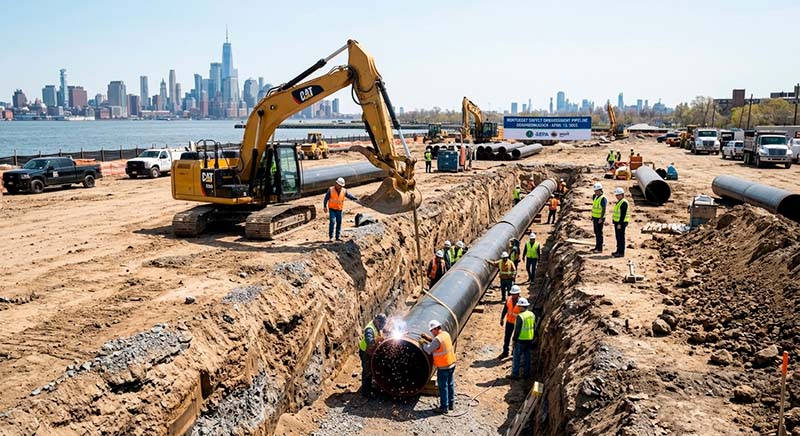
Top federal officials broke ground on the Northeast Supply Enhancement Pipeline in New York City. Department of Energy Secretary Chris Wright, Environmental Protection Agency Administrator Lee Zeldin, and Secretary of the Interior Doug Burgum launched the project. The infrastructure initiative transports natural gas from Pennsylvania directly to New York City and Long Island.
Williams Companies leads the massive construction effort. The project expands the existing Transco pipeline system across Pennsylvania, New Jersey, and New York. Executives expect the pipeline to begin service by the fourth quarter of 2027. The National Energy Dominance Council secured the necessary permits from state governments during the previous fall.
This $1 billion direct investment adds essential energy capacity to the region. The expansion introduces an additional 400,000 dekatherms of natural gas per day into the market. Analysts calculate that this volume supplies enough energy to serve approximately 2.3 million homes. The development addresses the growing energy demands.
Economic Growth and Consumer Savings
The pipeline delivers significant financial benefits to the public. Economists project a major reduction in utility costs. The project lowers regional electricity bills by $6 billion over the next 15 years. The construction also stimulates up to $1.8 billion in local economic development. Government leaders emphasize the importance of these savings. Planners expect energy prices to stabilize permanently. A 100% commitment to American energy dominance drives the project. The new infrastructure replaces outdated delivery systems.
Future Projects and Regional Goals
The administration plans further infrastructure expansion across the Northeast. Officials list the Constitution Pipeline as the next major priority. This future project targets the New England region. Energy distributors want to supply abundant natural gas during cold winter months. State leaders currently block the Constitution project. Federal officials push to overcome these local restrictions. Administrators argue the delays harm local workers. Bureaucratic red tape limits job creation. The government demands swift action to approve new permits. The XXI century economy requires robust energy networks.
More news: Securing Rare Earth Elements’ Supply Chains for the Energy Transition
More: DOE
