


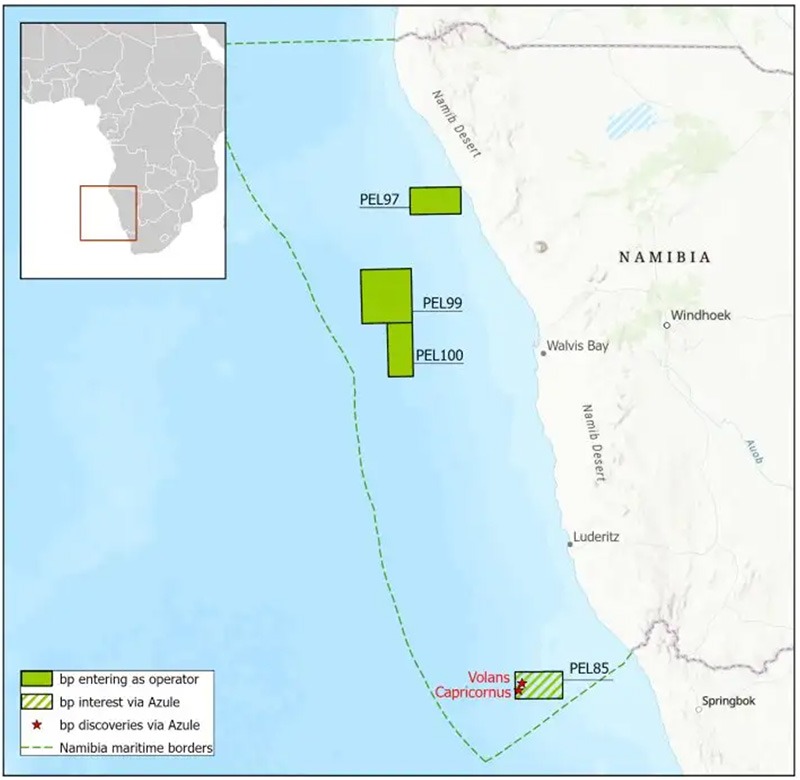
BP agreed to acquire a 60% interest in three offshore exploration blocks in Namibia from Eco Atlantic Oil & Gas. This strategic acquisition represents a significant expansion of the British multinational company’s upstream portfolio in the African continent. The transaction introduces the company as the designated operator of these promising offshore assets.
The agreement covers petroleum exploration licenses PEL97, PEL99, and PEL100, which sit within the highly anticipated Walvis Basin. The completion of the deal currently awaits standard closing conditions and regulatory approvals from the Namibian government. Following these approvals, Eco Atlantic retains a 25% working interest in the exploration blocks.
Namibia’s national oil company, NAMCOR, also maintains a 10% stake in the exploration licenses. Gordon Birrell, the executive vice president of production and operations for BP, noted that Namibia attracts growing industry interest with its exciting frontier basins. He emphasized that the agreement provides long-term growth potential and strengthens the global exploration portfolio of the company.
A New Frontier In The Walvis Basin
BP paid a one-time cash consideration of $2.7 million to complete the initial transaction. The agreement requires the British corporation to carry all costs for Eco Atlantic during the current exploration phase. The proposed work program includes extensive seismic data reprocessing on the PEL97 block. The companies will also conduct a three-dimensional seismic survey across PEL99 and PEL100. This advanced survey will cover at least 3,000 square kilometers of the ocean floor. The Walvis Basin represents a relatively underexplored offshore region compared to neighboring southern areas. However, petroleum analysts see immense geological potential beneath the ocean floor. If the partnership enters the second renewal period in 2028, the companies must drill an exploration well. Eco Atlantic gains the option to transfer an additional 10% interest to the operator at that stage. This framework reduces financial exposure for the smaller Canadian exploration firm. At the same time, the arrangement accelerates critical evaluation of the deepwater acreage. The Walvis Basin features water depths ranging from 1,500 to 3,000 meters. These extreme depths demand highly specialized marine drilling equipment and advanced engineering solutions.
The Push For Offshore Discoveries
The new Namibian licenses build upon a streak of successful drilling campaigns for the company. The corporation announced two distinct exploration discoveries globally since the start of 2026. These recent operational successes follow an exceptional performance during 2025. The company successfully recorded 12 global oil and gas discoveries throughout that calendar year. Such consistent success heavily reinforces its corporate strategy for long-term organic growth. The global energy sector currently demands new supply sources to replace aging conventional oil fields. International energy operators actively seek high-impact frontier plays across the world. Africa stands out as a global leader in high-impact wildcat exploration drilling. Industry analysts expect African basins to host a massive percentage of wildcat wells this year. Deepwater operations remain highly capital-intensive endeavors for any energy corporation. However, they offer massive financial scale and commercial upside for major corporations. BP clearly recognizes the strategic value of securing long-life resources in a tightening global market. The Walvis Basin acquisition perfectly aligns with this aggressive offshore exploration strategy. The company wants to leverage its deepwater technical expertise in these challenging marine environments.
Azule Energy And Regional Success
The British supermajor already possesses a strong footprint in the region through Azule Energy. BP and Italian energy company Eni created Azule Energy as a strategic joint venture. The corporate partners each hold a 50% stake in this highly successful African enterprise. Azule Energy announced four major hydrocarbon discoveries since the beginning of 2025. Two of these massive discoveries occurred in the neighboring nation of Angola. The drilling teams struck oil and gas at the Algaita-01 well and the Gajajeira-01 location. The other two major finds took place in Namibia’s prolific Orange Basin. The Volans-1X and Capricornus-1X discoveries proved the massive hydrocarbon potential of the region. These Orange Basin strikes provided BP with crucial geological data and operational confidence. The Walvis Basin lies further north along the expansive African coastline. Geologists believe the Walvis Basin shares similar source rock characteristics with the Orange Basin. The company aims to replicate its southern successes in these newly acquired northern blocks. The joint venture experience significantly lowers the operational learning curve in Namibian waters.
Namibia As A Global Oil Hotspot
Namibia never produced commercial quantities of crude oil during the XX century. However, the XXI century brought a massive wave of deepwater exploration to the country. Multiple international oil companies made historic discoveries over the past four years. Competitors like Shell, TotalEnergies, and Galp Energia completely transformed the national energy landscape. Some industry analysts estimate the Orange Basin contains up to 10 billion barrels of oil equivalent. Wood Mackenzie recently named a massive Namibian strike as the global discovery of the year. These massive subterranean reservoirs position Namibia as a potential multi-billion-barrel deepwater province. The nation could eventually become the third-largest oil producer in Sub-Saharan Africa. The national government wants to see commercial production begin before the end of the decade. The Walvis Basin now represents the next logical step in this national exploration boom. Early geological indicators suggest the Walvis Basin holds comparable reservoir characteristics to existing finds. International interest surges as global operators look for the next giant oil field. BP wants a leading role in defining this rapidly emerging petroleum system.
Economic Implications For Namibia
The emerging petroleum sector promises transformative socioeconomic benefits for the sparsely populated African nation. The national government maintains a highly competitive fiscal regime to attract foreign investment. The state captures roughly 50% to 55% of the total project revenue through taxes and royalties. The government created the national oil company, NAMCOR, to actively manage state interests. NAMCOR retains a 10% participating interest in the newly acquired Walvis Basin blocks. This financial structure ensures the Namibian people benefit directly from successful exploration campaigns. Analysts suggest the offshore sector could generate billions of dollars annually at full production capacity. High-impact development projects create thousands of direct and indirect jobs for local workers. The government actively promotes specialized workforce training programs and strict local content requirements. Port facility upgrades in coastal towns like Walvis Bay will support the massive offshore logistics network. The country currently relies heavily on mining and agriculture for basic economic stability. Future oil revenues could enable broader economic diversification and improve national living standards. The local administration views the petroleum industry as a critical engine for rapid national development.
Deepwater Challenges And Technologies
Extracting hydrocarbons from extreme ocean depths presents immense technical and logistical hurdles. Engineers must design robust systems that withstand freezing temperatures and crushing underwater pressure. The Walvis Basin targets often sit thousands of meters beneath the dark sea floor. Development costs for these complex deepwater projects typically range from $15 to $25 per barrel. These figures compare favorably to deeper North Sea projects but exceed shallow-water African operations. The industry utilizes floating production, storage, and offloading vessels for remote offshore field development. These massive specialized ships process the crude oil directly above the deepwater wells. Companies must also manage high volumes of associated natural gas found in these reservoirs. Reinjecting associated gas at depths of 3,000 meters requires cutting-edge subsea technology. The initial exploration phase focuses heavily on gathering and interpreting three-dimensional seismic data. Seismic surveys bounce powerful sound waves off subterranean rock layers to map potential oil traps. BP boasts decades of global experience operating similar deepwater projects around the world. The company deploys advanced computing algorithms to rapidly process the complex seismic information.
Environmental Approvals And Next Steps
The energy companies must secure environmental clearance certificates before deploying any drilling rigs. The Namibian government strictly regulates offshore activities to protect fragile marine ecosystems. Eco Atlantic previously laid the necessary groundwork for these crucial regulatory environmental approvals. BP assumes full operational responsibility for guiding the environmental and technical programs forward. The corporate partners expect to complete the seismic data acquisition over the next two years. Geoscientists will meticulously analyze the data to pinpoint the most promising deepwater drilling locations. A successful exploration well could quickly trigger a massive multibillion-dollar development plan. Fast-track operational scenarios suggest production could begin five to seven years after a final investment decision. The corporation plans to leverage standardized subsea equipment to reduce costs and accelerate project timelines. The Walvis Basin holds the raw potential to shift global energy supply dynamics significantly. BP willingly embraces the calculated financial risks associated with modern frontier exploration. The company actively pursues strategic assets that guarantee long-term financial value for its shareholders. The Namibian offshore frontier clearly provides the exact scale and upside the multinational giant desires.
Strategic Shifts In Global Energy
The global energy landscape undergoes massive structural transformations during the XXI century. Mature conventional oil basins face continually declining output and steadily rising production costs. Supermajors like BP must continually replenish their oil reserves to maintain global market dominance. Frontier regions offer the massive resource scale required to move the financial needle for these giants. The Walvis Basin transaction perfectly reflects a broader industry trend toward high-impact exploration. Companies willingly deploy huge capital into geologically risky but potentially massive deepwater plays. The ongoing energy transition also influences these strategic upstream financial investments. Operators heavily prioritize advantaged resources that feature high reservoir quality and low emissions intensity. Namibian crude oil generally exhibits high API gravity and very low sulfur content. Refineries process this light, sweet crude much more easily than heavy crude alternatives. The world still demands reliable liquid fuels despite the rapid growth of renewable energy. BP balances its green energy investments with highly targeted hydrocarbon corporate acquisitions. The Namibian offshore sector perfectly fits this strategy of securing high-value, long-life resources.
More news: TotalEnergies Strikes Major Hydrocarbon Reserves Offshore Republic of Congo
More: bp
