


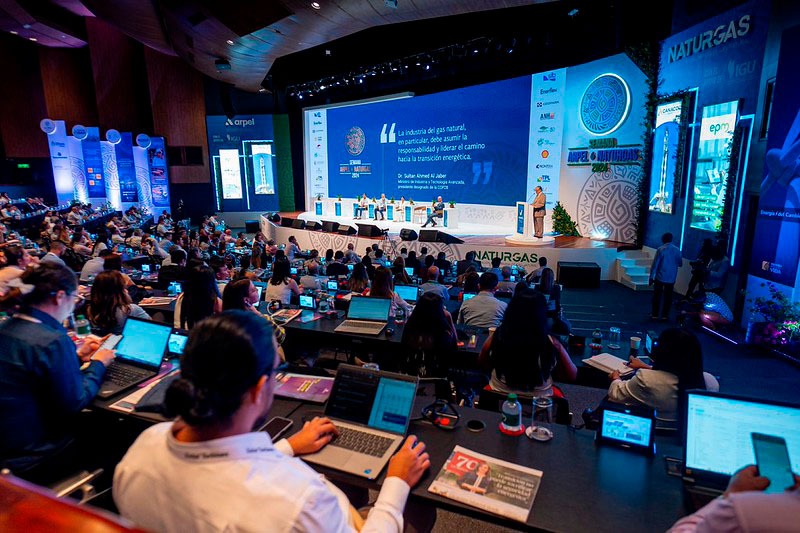
Latin America and the Caribbean stand at a critical crossroads in this highly complex environment. Leaders across the region recognize the urgent need to balance energy security with economic growth and sustainable practices. Against this backdrop, the upcoming Arpel 2026 Conference will gather the most influential industry executives in Buenos Aires from June 1 to June 4. The Association of Oil, Gas and Renewable Energy Companies of Latin America and the Caribbean organizes this pivotal event.
The conference agenda zeroes in on three definitive pillars that currently chart the course of the regional energy sector. These pillars include the deep impact of geopolitics on energy security, the rising prominence of natural gas as a powerful tool for regional integration, and the aggressive development of Argentina’s Vaca Muerta formation. Vaca Muerta ranks as one of the most critical unconventional hydrocarbon assets on the planet. Experts estimate the massive formation holds 308,000,000,000,000 cubic feet of shale gas and 16,200,000,000 barrels of shale oil.
The international landscape currently navigates intense structural changes and significant geopolitical tensions. These continuous shifts directly impact how countries trade, invest, and manage their natural resources. To address this reality, the conference opens with a highly anticipated presentation by Daniel Yergin. Yergin serves as the vice president of the Board at S&P Global. He will provide a strategic overview focused on “Geopolitics and energy under Trump 2.0.” Yergin will offer essential context and perspective regarding a global agenda undergoing profound transformation. The global market closely watches these developments.
Exploring Strategic Business Environments
Following the keynote, a central block will tackle the geopolitical scenarios defining the region. Representatives from prestigious international institutions will lead these crucial discussions. Participating organizations include the Center for Energy Studies at the Baker Institute of Rice University. The Institute of the Americas at the University of California will also contribute. Analysts from S&P Global Energy and MAP Latam will join the panel.
These experts analyze how global trade shifts affect local markets. The XX century saw similar realignments, but modern demands add new complexities. Latin America currently provides 8% of the global oil supply. Therefore, policy changes in Washington heavily influence regional investment flows. Panelists will dissect trade tariffs and international sanction policies.
They will evaluate how these policies shift capital toward Latin American assets. Clear regulatory frameworks attract long-term investments consistently. Unpredictable trade policies disrupt global supply chains. Investors demand absolute stability. The panelists will outline actionable strategies to navigate this turbulence. They will focus on securing supply chains across borders.
Argentina Showcases State Oil Evolution
The first day features a central interview with Horacio Marín. Marín holds the positions of chairman of the Board and CEO at YPF. He will analyze the deep transformation process within the company. Marín will outline the role of YPF in the evolution of the regional industry. The state-controlled company leads the charge in domestic production. Marín recently spearheaded initiatives to divest mature conventional fields. This strategy directs more capital toward lucrative shale operations. YPF plans to invest over $3,000,000,000 dollars in 2026 alone.
This capital targets shale oil expansion and critical infrastructure. Marín will detail how these investments reshape the national economy. Argentina expects to exceed 1,000,000 barrels of daily oil production by 2030. YPF drives a significant portion of this growth. Marín will explain the strategic pivot clearly. “The objective focuses on maximizing the value of the company and accelerating shale production,” Marín stated regarding this shift. The interview promises a clear look into future operations.
Executives Debate Industry Growth Trajectories
CEO panels form a core pillar of the comprehensive program. These sessions gather top executives from leading companies. They will debate investment, growth, and sustainability. The industry operates in an environment marked by uncertainty and accelerating changes.
The oil panel features prominent industry figures. Julio Friedmann represents ENAP. Cecilia San Román speaks for ANCAP. Andrés Cavallari attends from Raízen. Ricardo Hösel represents Oldelval. Felipe Bayón joins from GeoPark. Carlos Gilardone represents Quintana Energy. These executives manage companies responsible for vast energy outputs. Oldelval transports nearly 100% of the oil produced in the Neuquén Basin. The executives face pressure to decarbonize operations while meeting growing demand.
They invest heavily in modern operational efficiency. Many companies explore biofuels to lower their carbon footprints. The panel will explore distinct strategies to attract fresh capital. They will also discuss mitigating environmental impacts. Executives must balance short-term profits with long-term climate goals. The discussion will highlight specific technological upgrades implemented across regional refineries.
Natural Gas Links Regional Markets
The natural gas panel mirrors the high-level expertise of the oil session. This group brings together key players in gas infrastructure and distribution. Tomás Delgado represents TGP. Horacio Pizarro speaks for TGN. Oscar Sardi attends from TGS. María Julia Aybar joins from Hunt Oil Company. Juan Manuel Rojas represents Promigas. Together, these leaders will offer a direct vision of corporate strategies. Companies constantly redefine their approaches to handle market volatility. They also adapt to shifting demand and transition challenges.
Natural gas serves as a crucial bridge fuel. It emits 50% less carbon dioxide than coal when burned. South America currently consumes roughly 6,000,000,000 cubic feet of natural gas daily. Regional integration relies heavily on robust pipeline networks. TGN and TGS operate thousands of miles of complex pipelines. The panel will discuss reversing older pipelines. Reversing the Northern Gas Pipeline allows Argentina to export gas to Brazil. This move replaces declining supplies from neighboring nations. Participants will detail the infrastructure investments needed to support these regional connections.
Shale Operations Accelerate Economic Expansion
The development of unconventional resources claims a prominent spot on the agenda. A specific panel focuses entirely on Vaca Muerta. The session highlights its projection as a massive growth engine for the region. Juan Manuel Ardito participates for YPF. Ricardo Ferreiro represents Tecpetrol. Ricardo Digregorio joins from Pan American Energy. Ignacio Mazariegos represents GeoPark.
These experts will analyze the current development status. They will evaluate expansion prospects and regional infrastructure challenges. Experts calculate the Vaca Muerta formation covers 30,000 square kilometers. The geological structure lies mostly within the Neuquén province. Drillers have only tapped a small fraction of the total area so far. Vaca Muerta requires massive logistical support constantly. Tecpetrol currently operates the massive Fortín de Piedra block. This block alone produces roughly 15% of the total gas output of Argentina.
The panel will debate the critical need for more evacuation capacity. Pipelines currently limit maximum daily production levels. The speakers will outline timelines for upcoming pipeline completions. Efficient operations make shale products highly competitive globally.
Advancing Liquefied Natural Gas Exports
The agenda incorporates other critical sector topics seamlessly. The expansion of Liquefied Natural Gas usage and export takes center stage. Several major organizations will drive this specific discussion. Participants include Promigas and Naturgas from Colombia. The International Gas Union also joins the debate. TGS, Rystad, the Argentina-Texas Chamber of Commerce, and YPF round out the panel. LNG allows countries to transport gas across vast oceans. This capability breaks strict reliance on local pipelines.
Global LNG demand grew by 3% last year. Argentina currently plans massive LNG export terminals on its coast. YPF leads a project aiming to export large volumes globally. This ambitious goal targets European and Asian markets directly. The panel will discuss the massive capital required for liquefaction plants. Plants often cost billions of dollars and take years to construct. Regulatory stability remains mandatory to secure international financing. Colombian representatives will share their experiences with LNG imports. Colombia imports gas to cover domestic shortages during severe droughts. The session provides a comprehensive look at the entire value chain.
Forging Stronger Cross-Border Partnerships
Regional energy integration requires deep cooperation between neighboring countries. A dedicated panel will address these diplomatic and logistical opportunities. Petrobras and the Brazilian Institute of Petroleum, Gas and Biofuels participate. TGN, OLACDE, and Tecpetrol also contribute to the important discussion. These organizations bring complementary perspectives regarding cross-border articulation. Brazil presents a massive consumer market for natural gas.
The Brazilian industrial sector demands reliable and affordable energy. The industrial sector accounts for 40% of this massive consumption nationally. Argentina possesses the resources but needs the external demand. Integrating these markets benefits both nations economically. The speakers will analyze the regulatory hurdles slowing down regional integration. Divergent national policies often complicate cross-border energy trade.
Harmonizing these rules accelerates energy transfers significantly. The panel will explore the reactivation of older energy treaties. They will also examine new frameworks for electricity and gas exchanges. Improved integration enhances regional energy security dramatically. Countries can support each other during local supply crises. The discussion will highlight successful examples of binational energy projects.
Modernizing Refineries for Tomorrow
The conference provides a stage for analyzing crucial downstream trends. Multiple panels will examine new trends in the refining sector. Representatives from Ecopetrol, YPF, and Pan American Energy will participate. Arthur D. Little, Raízen, and ENAP will also share valuable insights. Trafigura, ANCAP, and S&P Global Energy complete the impressive roster. Modern refineries face increasingly strict environmental regulations today.
They must produce cleaner fuels to meet updated global standards. Global refining capacity faces a projected deficit by 2030. Operators must invest billions to upgrade aging atmospheric distillation units. The panels will discuss the integration of biofuels into traditional refining processes. Raízen already leads significant biofuel initiatives in the Brazilian market. The executives will evaluate the economic viability of these green upgrades.
They will analyze shifting consumer demand patterns carefully. The transition toward electric vehicles alters long-term fuel consumption forecasts. Refineries must adapt quickly to survive this inevitable transition. The experts will debate strategies to maximize lucrative petrochemical production. Petrochemicals offer higher margins than traditional transportation fuels.
Confronting Next-Generation Industry Complexities
The energy sector tackles challenges far beyond traditional extraction and refining. The conference program reflects the growing complexity of the global energy system. Dedicated sessions will explore deepwater exploration frontiers. Offshore projects in Brazil and Guyana currently attract billions in investment. Other panels will tackle climate risk management and the energy transition. Companies must protect critical assets from extreme weather events. Digital transformation and industrial cybersecurity represent critical operational vulnerabilities. Hackers frequently target critical energy infrastructure worldwide.
Artificial intelligence applications streamline operations and predict expensive equipment failures. The future of work also occupies a central theme. The industry struggles to attract young, talented engineering professionals. Automated rigs require specialized software engineers to operate efficiently. The agenda covers these diverse yet interconnected topics thoroughly. Each element plays a crucial role in modern energy operations. Ignoring cybersecurity or talent acquisition threatens overall corporate stability. The conference ensures a holistic approach to complex sector challenges.
Associations Guide Long-Term Strategic Visions
Industry associations play a prominent role at the event. They will lead two spaces dedicated to analyzing the sector. These analyses offer both global and regional perspectives simultaneously. They maintain a strong focus on the specific realities of each country. Participating associations include Ipieca, SPE International, and IOGP.
The IGU, WPC Energy, IBP, and ACP will also participate. SNMPE, SPH, Naturgas, and the Argentine Oil and Gas Institute complete the group. These organizations set rigorous standards and best practices globally. They help companies navigate highly complex regulatory environments. The associations foster crucial collaboration among fierce corporate competitors. They publish essential data that guides massive investment decisions. The panels will address the harmonization of sustainability reporting standards.
Investors demand transparent environmental and social governance metrics today. The associations help standardize this vital reporting. The conference consolidates its position as a key space to anticipate trends. The event generates opportunities and strengthens dialogue among essential regional and global actors.
More news: Funds for Five Organizations to Revive Domestic Gallium Extraction
More: Arpel Conference
