


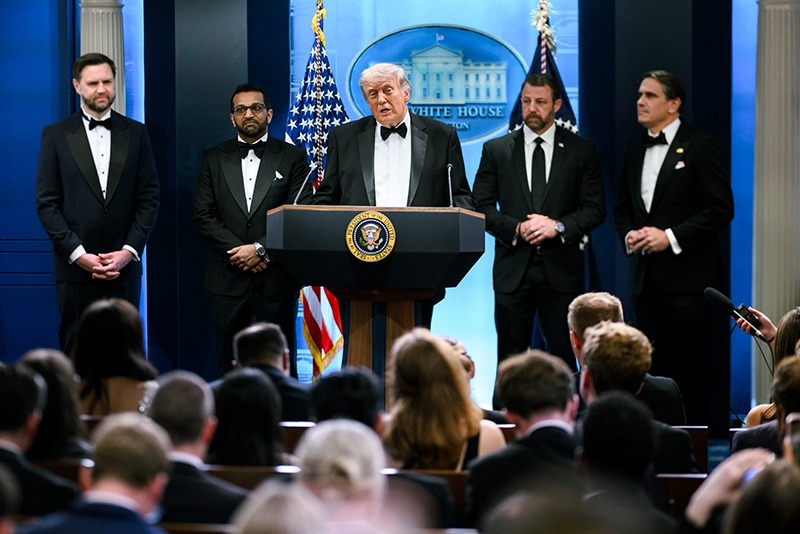
The third assassination attempt on President Donald Trump on April 25 sent massive shockwaves through an already fragile global economy. Secret Service agents evacuated the president from the White House Correspondents’ Dinner after a gunman fired shots in the Washington Hilton lobby. The incident instantly escalated geopolitical anxieties worldwide. Investors immediately connected the domestic political violence to the ongoing United States naval blockade of the Strait of Hormuz.
Energy markets reacted violently to the weekend chaos in Washington. Traders fear that domestic instability could disrupt the military command structure overseeing the Middle Eastern blockade. The United States military currently restricts all vessels entering or leaving Iranian waters. This strict embargo attempts to pressure Tehran into a permanent peace deal following the severe escalations in February 2026. The latest attack on the president adds unpredictable risks to a situation that already chokes global supply chains.
The Strait of Hormuz represents the most critical chokepoint for the global energy system. The current maritime blockade removes approximately 11 million barrels of crude oil per day from the international market. This massive deficit equals almost 20% of global oil supplies. Furthermore, the disruption halts the movement of nearly 20% of the global liquefied natural gas trade. The abrupt removal of these essential resources pushes energy security to the forefront of international diplomacy.
Asian Markets Face Severe Shortages
Asian countries absorb the hardest hit from the Hormuz closure. The region traditionally purchases 80% of Middle Eastern oil exports. It also consumes 90% of the natural gas from the area. The April 25 security incident increased panic among Asian energy importers. Governments in Southeast Asia implemented emergency fuel rationing to preserve depleting reserves. Countries like Indonesia and Thailand increased energy subsidies to protect citizens from soaring costs.
Manufacturers across the continent reduced working hours to save electricity. The supply gap forces these nations to seek alternative energy sources immediately. The sudden halt of 286 billion cubic meters of natural gas creates an unprecedented crisis. Asian leaders worry that American political instability will prolong the naval blockade indefinitely.
Brent crude oil prices breached the $100 mark following the weekend violence. The market volatility directly affects global inflation rates and consumer goods. Shipping companies avoid the Gulf of Oman completely due to the military presence. Insurance premiums for maritime transport skyrocketed during the last two weeks. Importers pass these astronomical transportation costs directly to everyday consumers. The crisis affects agricultural sectors because the region supplies essential nitrogen fertilizers.
Food security now faces a severe threat in developing nations. The United States must maintain strict enforcement to keep the blockade effective. However, the domestic turmoil following the Washington shooting distracts lawmakers from international economic policies. Analysts predict that energy prices will remain elevated throughout 2026.
Western Hemisphere Production Accelerates
Western energy producers quickly capitalize on the Middle Eastern supply vacuum. The United States, Canada, Brazil, and Guyana expanded their oil extraction operations recently. These nations enjoy unprecedented market shares while the naval blockade continues. American drilling companies maximize their available production to generate massive profits. The assassination attempt on the president highlighted the fragility of the international system.
This realization drove investors to fund energy projects within the Americas. The shift guarantees a more secure supply chain for Western democracies. Energy companies in Texas and North Dakota reported record drilling activities this month. They plan to export millions of barrels to desperate European allies. This geographic pivot transforms the global energy paradigm permanently.
European nations face difficult choices regarding their long-term energy strategies. They released emergency oil reserves to mitigate the immediate price shocks. The International Energy Agency coordinated the release of 400 million barrels recently. However, these short-term relief measures delay necessary investments in renewable energy. The latest political violence in Washington complicates diplomatic efforts to end the conflict.
European leaders fear that American domestic issues will derail the Islamabad peace talks. The blockade forces Europe to rely heavily on expensive American liquefied natural gas. Some countries even resumed purchasing limited amounts of Russian oil temporarily. The ongoing crisis proves that fossil fuels still dictate international relations. Governments struggle to balance environmental goals with basic economic survival.
Evasion Tactics Challenge the Embargo
Despite the strict military presence, several vessels successfully bypassed the naval barrier. Cargo tracking groups report that 34 tankers evaded the American blockade recently. These sanctioned ships transport millions of barrels using deceptive navigation techniques. Tankers frequently turn off their transponders to hide their geographic locations. Satellite imagery shows ships conducting illegal transfers in the open ocean.
The United States Navy intercepted numerous vessels and redirected them to port. However, the sheer volume of maritime traffic makes total enforcement impossible. The April 25 assassination attempt demands significant attention from American security agencies. This distraction potentially weakens the military focus required to maintain the embargo. Smugglers exploit any lapse in surveillance to move lucrative crude oil.
Military officials warn about the presence of explosive mines in the strait. Naval engineers estimate that clearing these hazards requires at least six months. The explosive devices threaten both commercial shipping and international military vessels. A second aircraft carrier recently joined the blockade to strengthen the perimeter. The military must secure the passage before civilian trade can resume safely.
The shocking violence at the White House Correspondents’ Dinner overshadows these tactical military achievements. Global markets despise the resulting combination of domestic instability and international conflict. The energy sector requires clear policy direction to stabilize volatile commodity prices. Until authorities secure the Strait, the global economy faces persistent inflation risks. The energy grid remains incredibly vulnerable to geopolitical shocks.
More news: Baker Hughes Strikes $1.45 Billion Deal to Sell Waygate Technologies to Hexagon
More: TWH
