


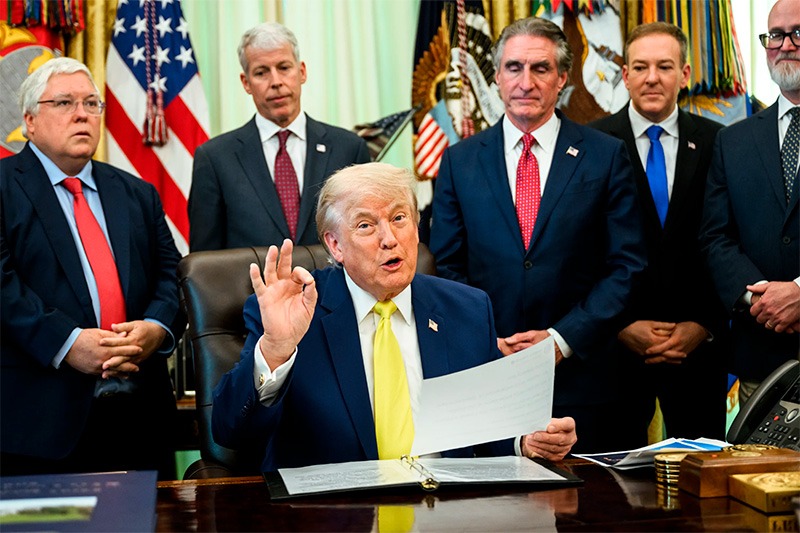
President Donald Trump revealed a comprehensive plan on Thursday to allocate nearly $700 million to revitalize the struggling American coal sector. The administration seeks to reverse the severe decline that hit traditional energy companies throughout the early XXI century. Officials plan to distribute the funds across multiple states to modernize older facilities and stimulate local economies. The initiative relies on the Defense Production Act, a law from 1950, to categorize supply chains as critical elements for national security.
Boosting Traditional Energy Markets
This strategy effectively bypasses certain bureaucratic hurdles and ensures immediate capital flow to approved projects. Supporters argue that the investment will stabilize the power grid and shield consumers from volatile prices. Environmental regulations and fierce competition from natural gas have systematically reduced reliance over the last decade. The current leadership views traditional power generation as an indispensable asset for the nation.
The ambitious spending package targets 13 existing plants across the country for immediate upgrades and extended operational lifespans. The government also intends to fund the construction of new facilities in Alaska and West Virginia. These specific projects represent the first new coal plants approved in the United States since 2013. Additionally, the funding will restart a completely shuttered power plant in Maryland and finance a delayed export terminal in Oakland, California.
White House officials estimate that these combined efforts will directly create or support more than 14,000 jobs within the mining, construction, and maritime industries. Industry executives attended the official announcement to praise the government for prioritizing heavy industry and protecting thousands of specialized jobs. The administration firmly believes that reliable baseload power remains essential to meet the soaring electricity demands of modern artificial intelligence data centers.
Shifting Domestic Power Dynamics
Market statistics paint a clear picture of the dramatic shifts occurring within the domestic energy landscape. The sector generated approximately 45% of all national electricity as recently as 2010. Market forces and regulatory pressures steadily drove that share down to a mere 15% by the end of 2024. Natural gas currently provides roughly 43% of the power supply. Renewable sources and nuclear energy make up the remaining percentage.
The new federal initiative aims to disrupt this long-term trend and restore mining companies to a prominent market position. International agencies note that global demand for fossil fuels recently reached record highs. Experts predict a plateau in the coming years despite these recent peaks. Administration officials ignore these global forecasts entirely. They insist that American producers can capture new international markets easily. The latest executive actions focus heavily on expanding export capacities.
Federal authorities utilized emergency orders earlier this year to keep aging plants operational during severe winter storms. Energy officials required facilities in multiple states to run past their scheduled retirement dates. The administration claims these actions successfully prevented widespread blackouts during brutally frigid weather. Government representatives cite these instances as absolute proof that traditional power plants remain necessary. The energy department regularly issues short-term extensions to bypass local environmental restrictions.
Leaders argue that natural gas pipelines sometimes fail during extreme cold snaps. They point out that solid fuel plants store months of resources directly on site. This localized storage provides unparalleled reliability during major supply chain disruptions. Critics consistently challenge these assertions regarding grid stability. They note that frozen fuel stockpiles caused significant operational failures during past storms. The federal government completely ignores these historical failure points. Officials simply refuse to acknowledge any reliability issues.
Environmental Backlash and Industry Outlook
Environmental groups rapidly condemned the massive financial package. Activists view the policy as a severe step backward for climate initiatives. Critics argue that the investment wastes taxpayer money on obsolete technology. The administration recently froze permits for offshore wind projects. Officials also blocked multiple solar installations on federal lands. The defense council warned about dirtier air and higher electricity bills. Advocates suggest that aging plants should retire naturally without federal intervention.
Opponents highlight the severe health risks stemming from increased dust pollution. Environmentalists also worry about the proposed export terminal in California. They claim the facility will harm local communities through increased train traffic. The government dismisses these environmental concerns entirely. Officials prioritize industrial growth and grid reliability over ecological preservation. They assert that modern mining techniques sufficiently address all environmental hazards.
Industry leaders strongly support the aggressive federal intervention. A national association celebrated the long-awaited policy shift. Executives believe the funding will secure energy independence for decades. Increased artificial intelligence operations demand massive amounts of constant electricity. Traditional power plants handle these baseload requirements better than intermittent renewable sources. The new investments will directly upgrade existing infrastructure across several states.
Lawmakers from mining regions praised the executive actions during the recent event. They confirmed that the funding protects rural communities from total economic collapse. The plan also leverages federal lands to expand mining operations significantly. The administration previously announced plans to open vast territories for resource extraction. This $700 million injection represents the most significant industry bailout. Companies expect immediate benefits as the federal government bypasses standard regulatory delays.
More news: Mobile Nuclear Reactors
More: TWH
